Karen food re-imagined: Culinary art by Chef Eak
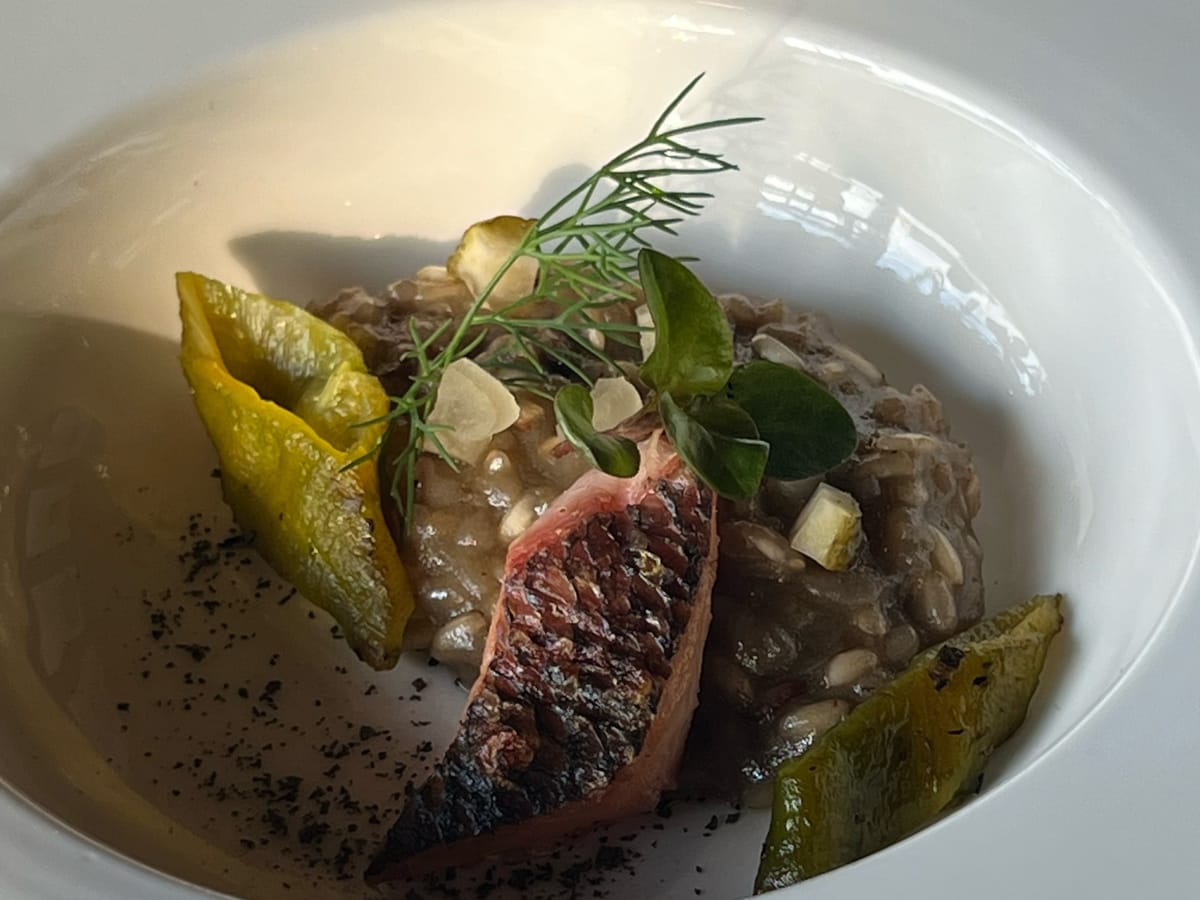
CHEF EAKPOL “EAK” PICHWONG, who owns the Michelin-recognised Ekachan Restaurant in Chiang Mai, transforms Thai ethnic cuisine into culinary art forms that suit the palates and mindsets of visitors – local and foreign alike. One example is his Karen-inspired risotto with fish soup, on which he led a workshop.
I had gone to “Ekachan: The Wisdom of Ethnic Thai Cuisine” for dinner with my family when I saw the tail end of a class in which a couple was tasting dishes served by a chef. Curious, I asked to join another workshop and was promptly invited.
Upon arrival for the 90-minute session at 3pm on December 8, we were served roasted red rice tea and a southern Thai dessert, ka nhom kee mun (steamed or baked taro [yam] mixed with coconut milk and sugar, topped with caramelised coconut milk). The tea’s slight smoky bitterness contrasted nicely with the dessert’s richness.
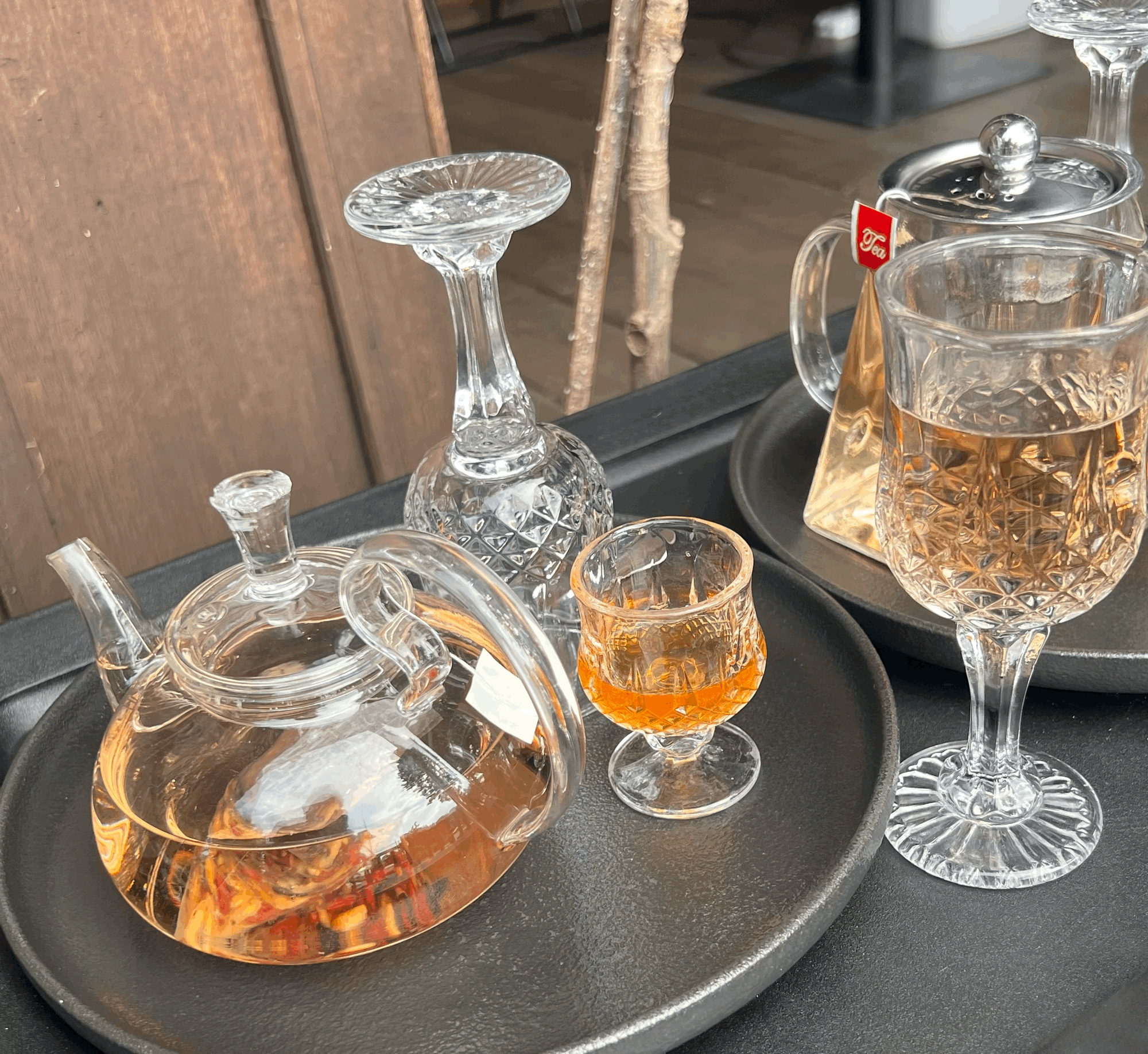
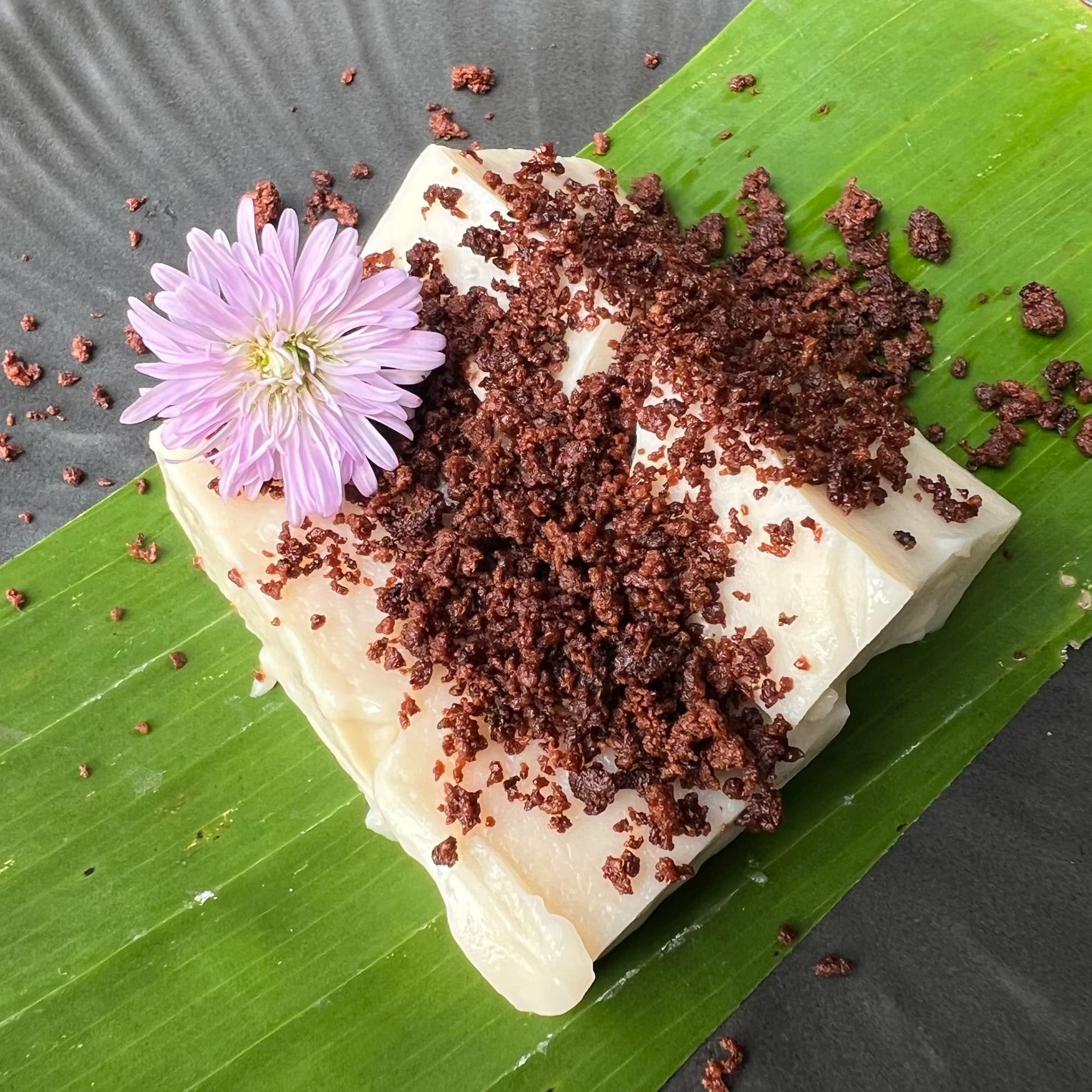
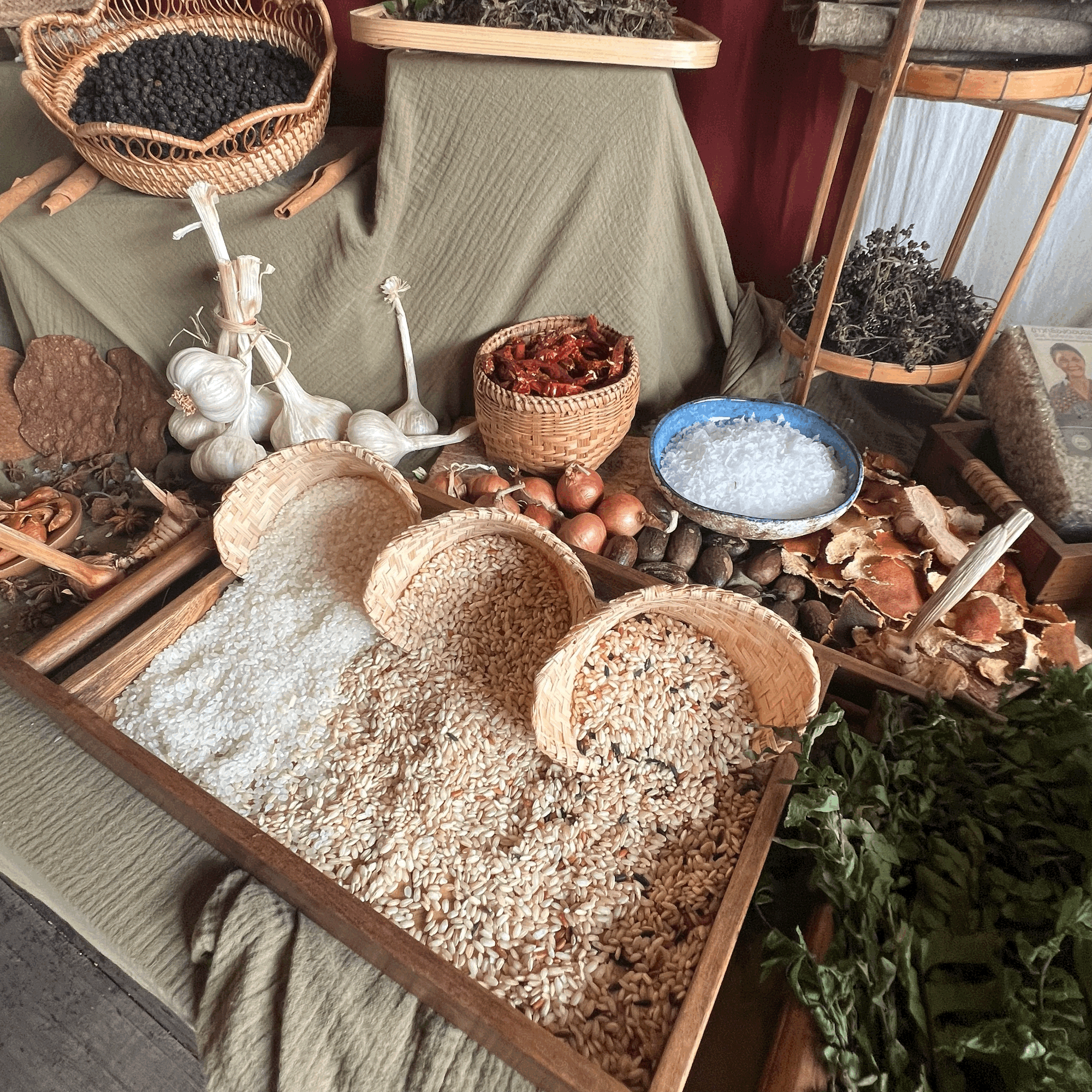
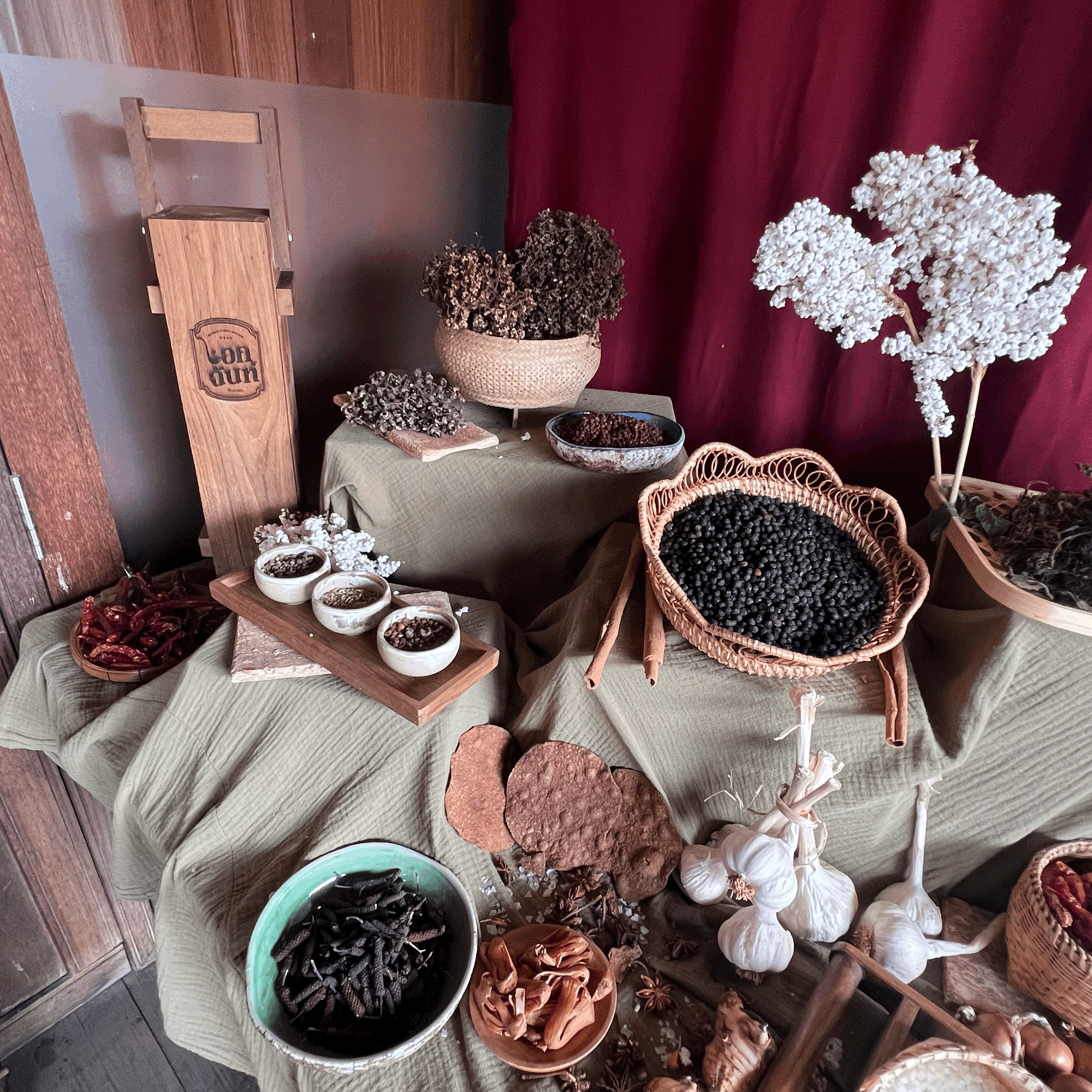
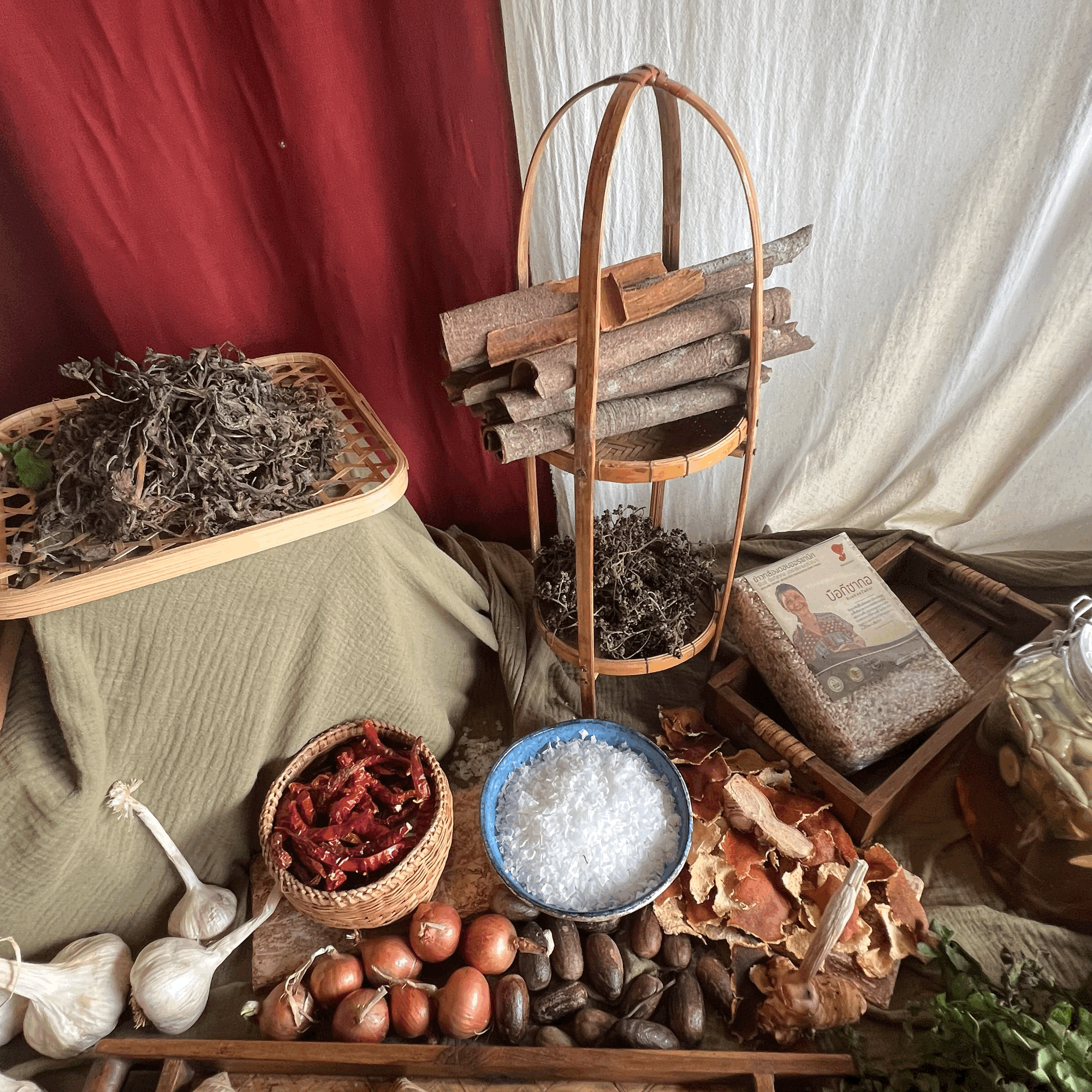
Roasted red rice tea (top left), Southern Thai dessert ka nhom kee mun (top centre) and the variety of spices and other flavour-enhancers used
The workshop was held on the verandah of a large, old “kampung house” or “ancient home,” now transformed into a restaurant. With a large backyard facing the Ping River, the property’s heritage status complements Chef Eak’s ventures to seek out Thai ethnic foods and reimagine them.
Exotic local ingredients
After introducing himself, Chef Eak quickly explained to us a range of ingredients, many of which I had not encountered. Like hor tee la (a fern which adds umami and sweetness to soups) and ba-geu-eur (fermented dried mustard greens with “gentle sour notes” and a smoky scent).
Two dishes
His dishes of the day would be (1) a risotto made from three locally-grown rice varieties and topped with fish, chilli and pickles, and (2) fish soup made with sun-dried patin (pangasianodon hypophthalmus, known locally as pla swai), shallots, lemongrass, galangal and bird’s eye chilli.
Tri-texture risotto
The risotto turned out to be a wealth of textures and taste. Three types of rice were used:
- The doi rice, a mountain grain from Chiang Rai, has the same ancestry as the Japanese variety. It provides a soft texture.
- The rare bue-gi highland rice provides a medium-to-hard texture.
- Another rare bue-sa-kor red rice from the Pgak’nyau highlands is relatively complex and chewy. The highlands refer to the mountainous regions of northern Thailand inhabited by the Pgak’nyau people (also known as Sgaw Karen).
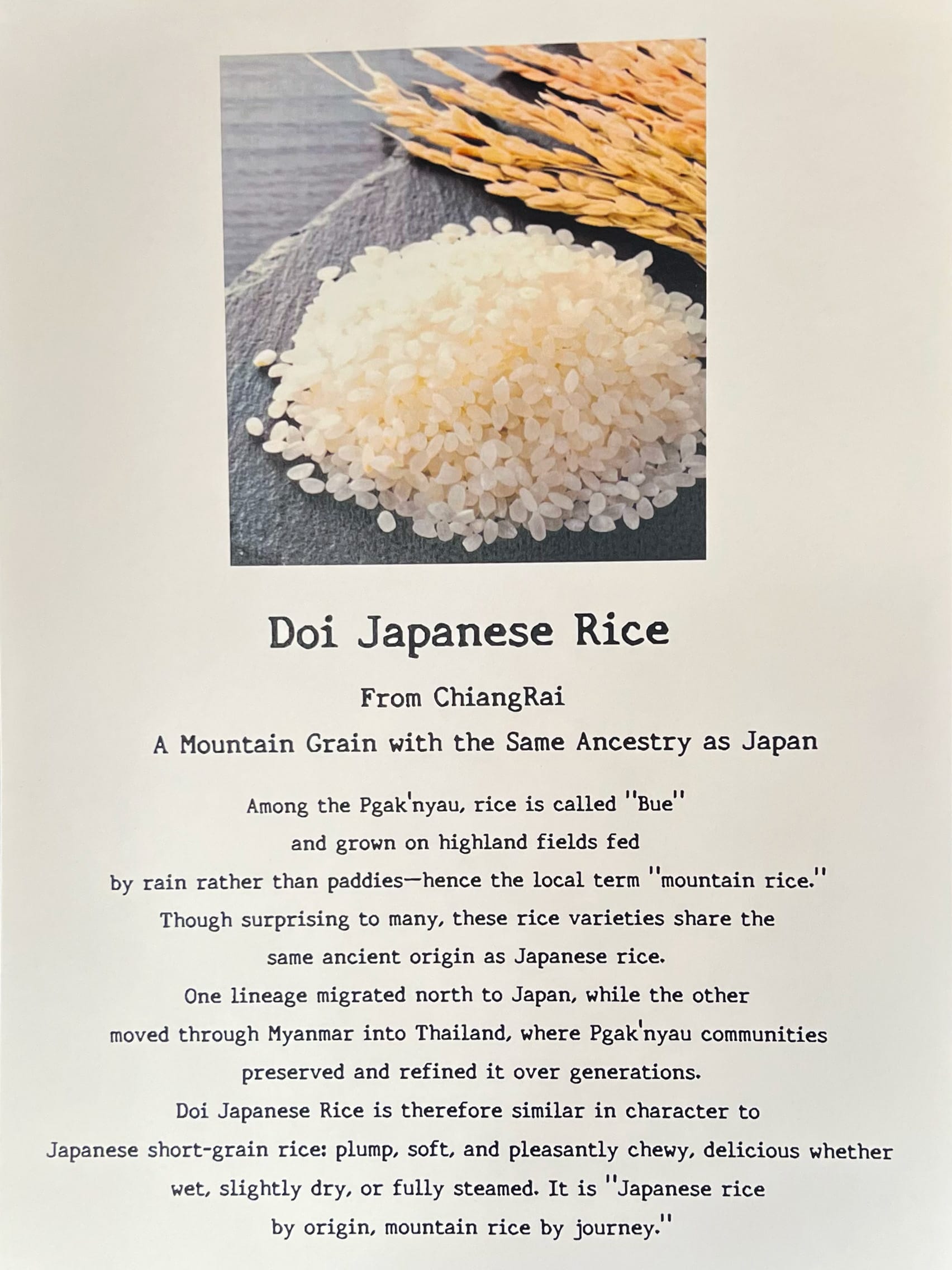
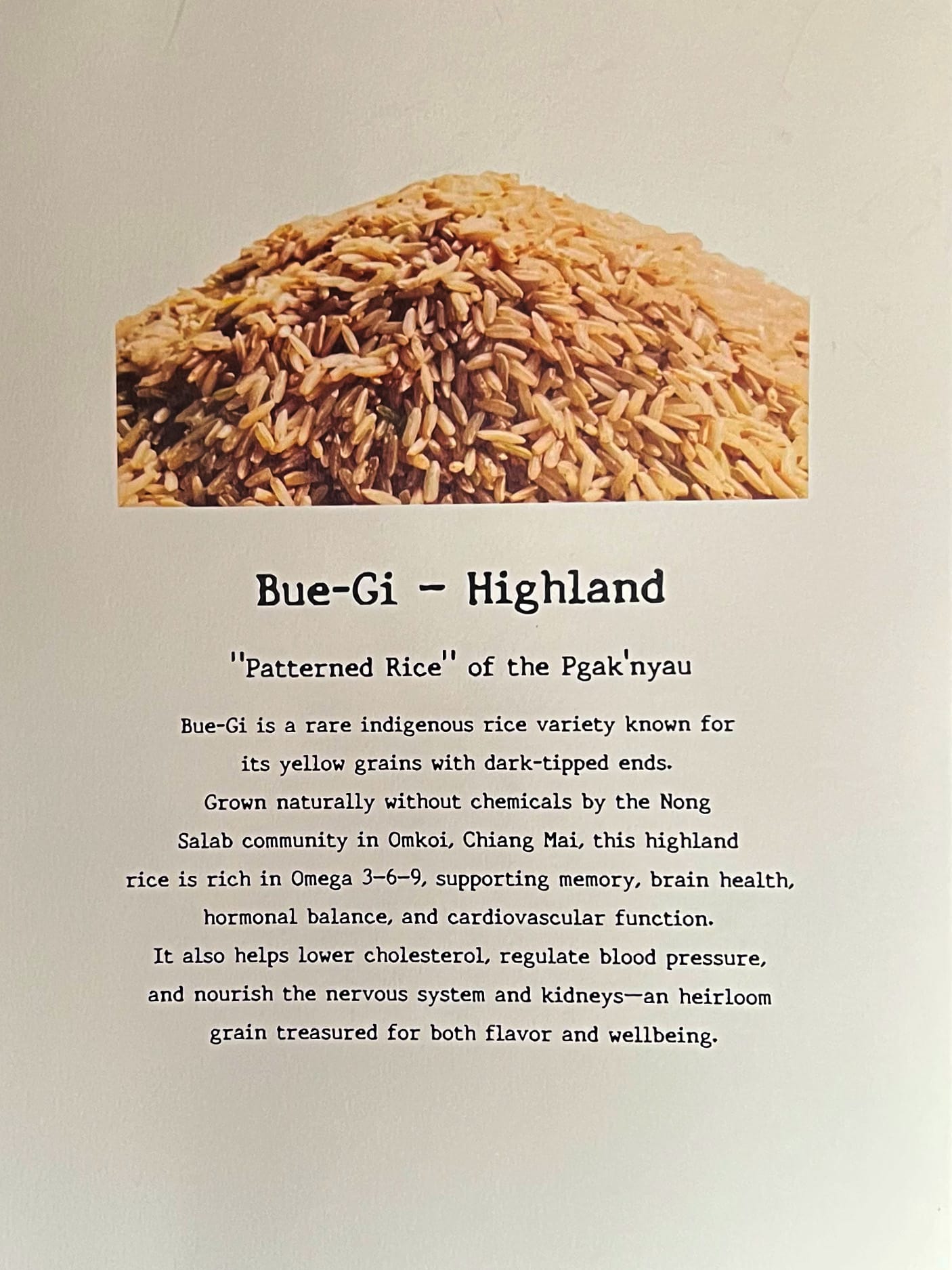
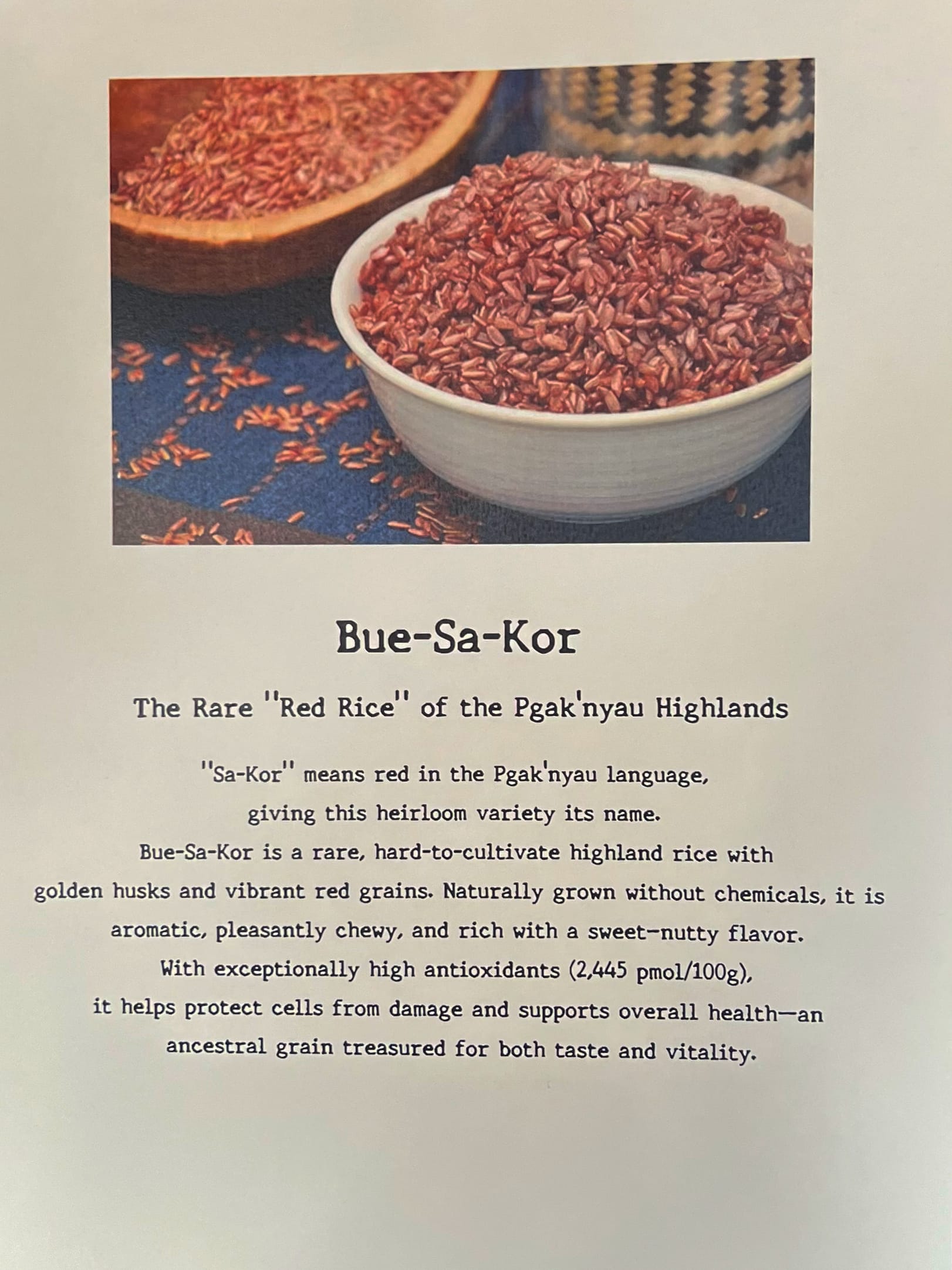
The rice was mixed together and soaked in water for 30 minutes, then sautéed in a pan. Spoonfuls of stock were added constantly to maintain consistency. No dairy product is added to the risotto. Instead, it gets its creaminess from mashed potatoes called man a lu, a local variety.
The cooked risotto is topped with slices of grilled sun-dried snakehead (haruan in Malay or lay hoo in Hokkien), pickled bitter gourd and chargrilled chilli from Myanmar. Finally, a pinch of powdered bar-hu-suea (Thai oregano) is sprinkled around the risotto for that extra touch of finesse.
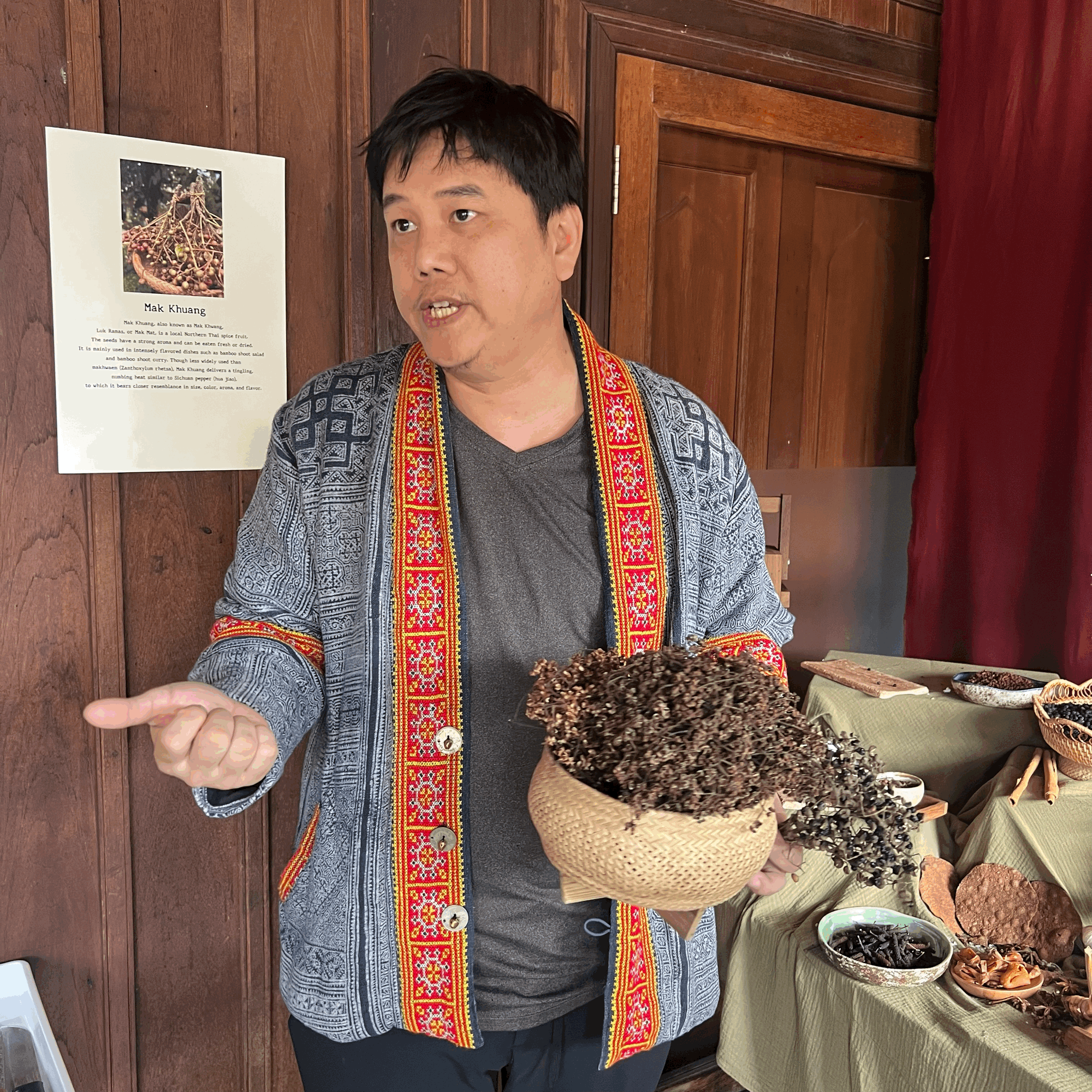
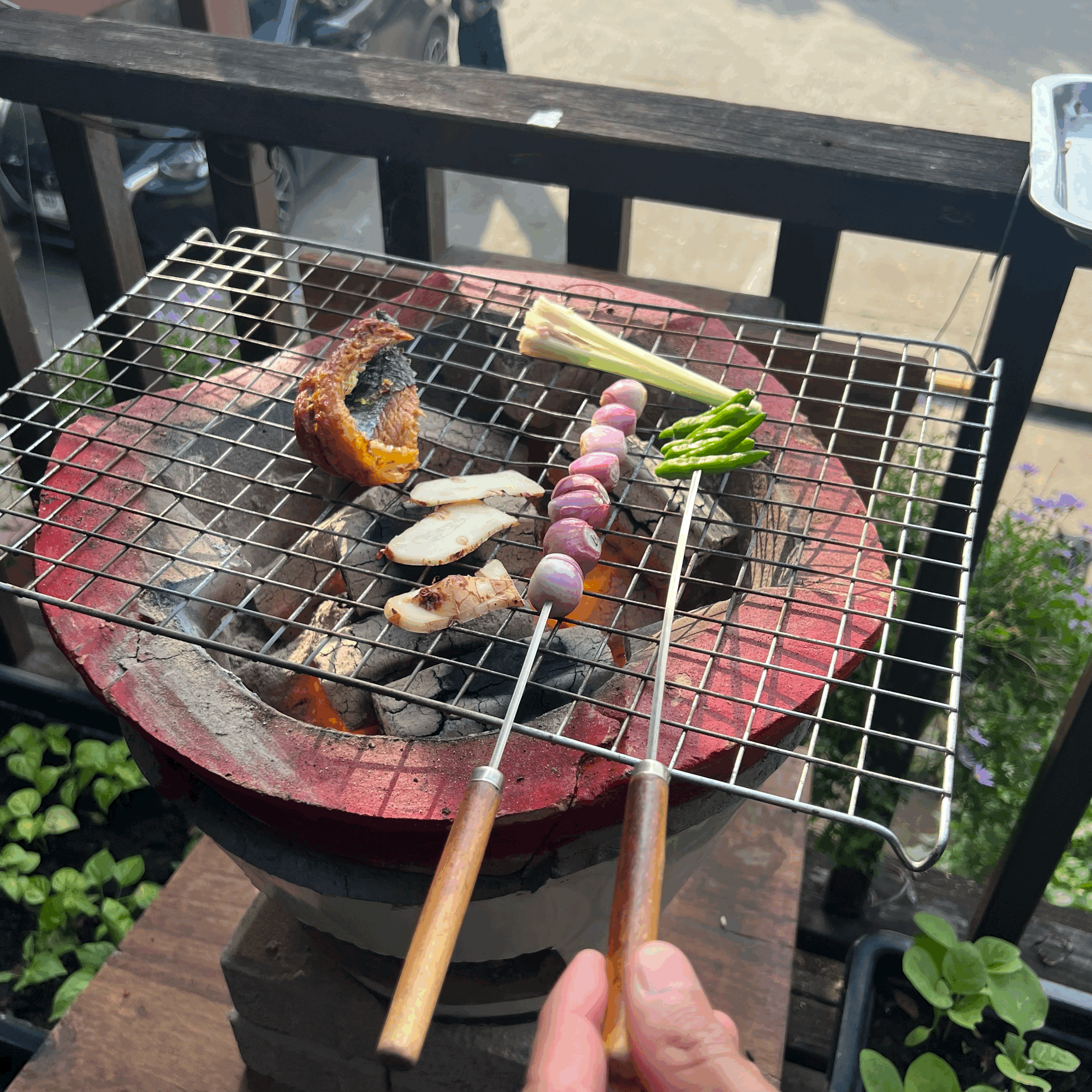
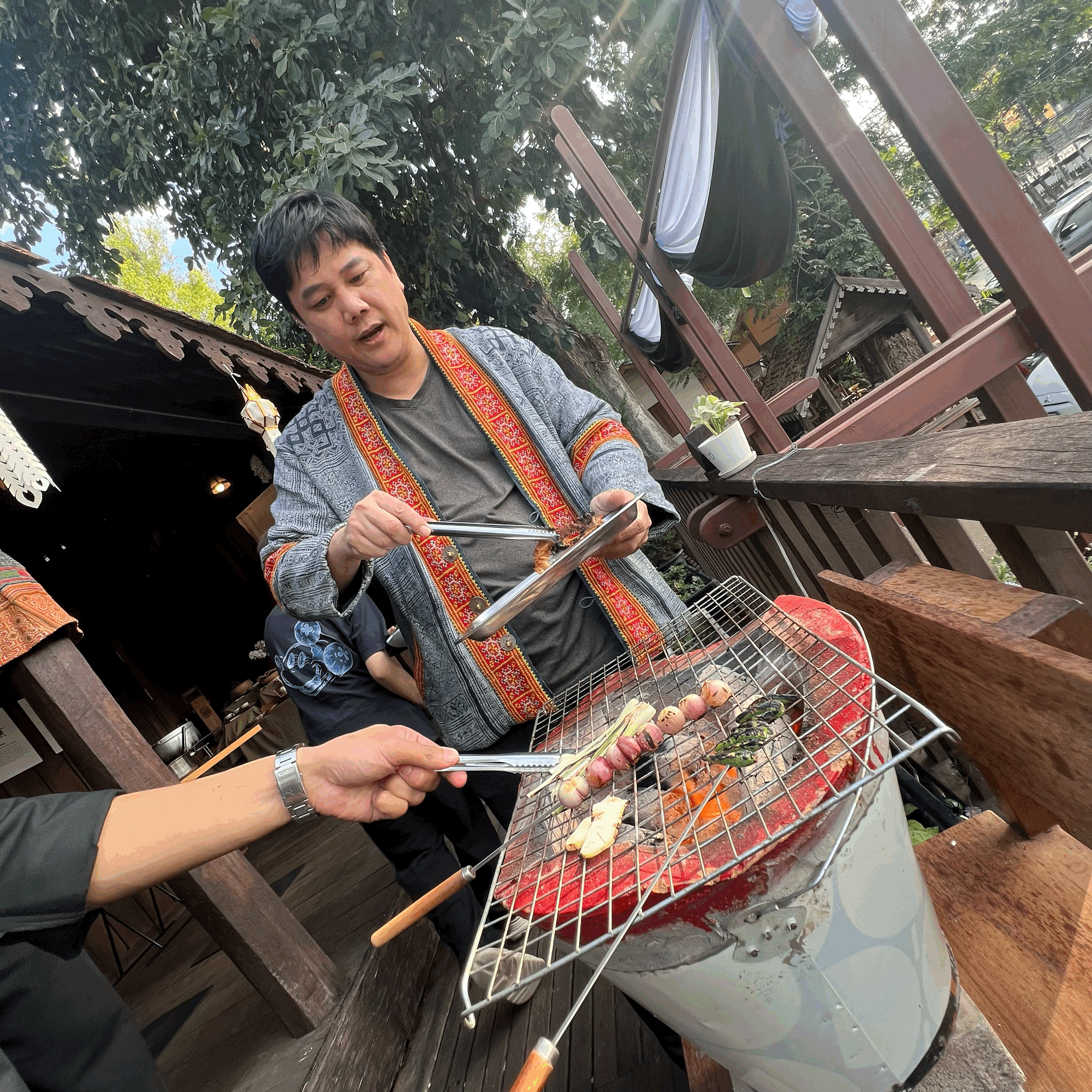
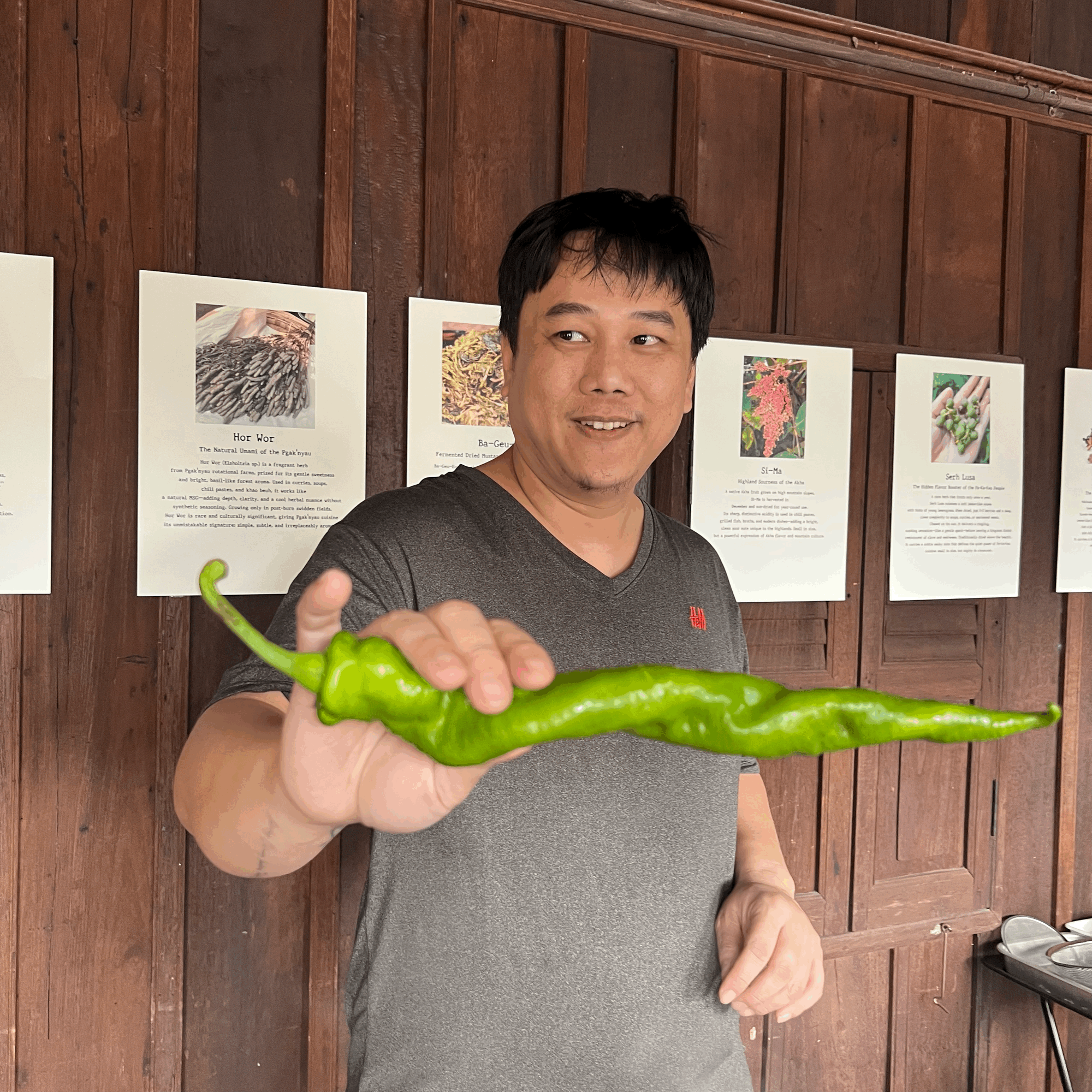
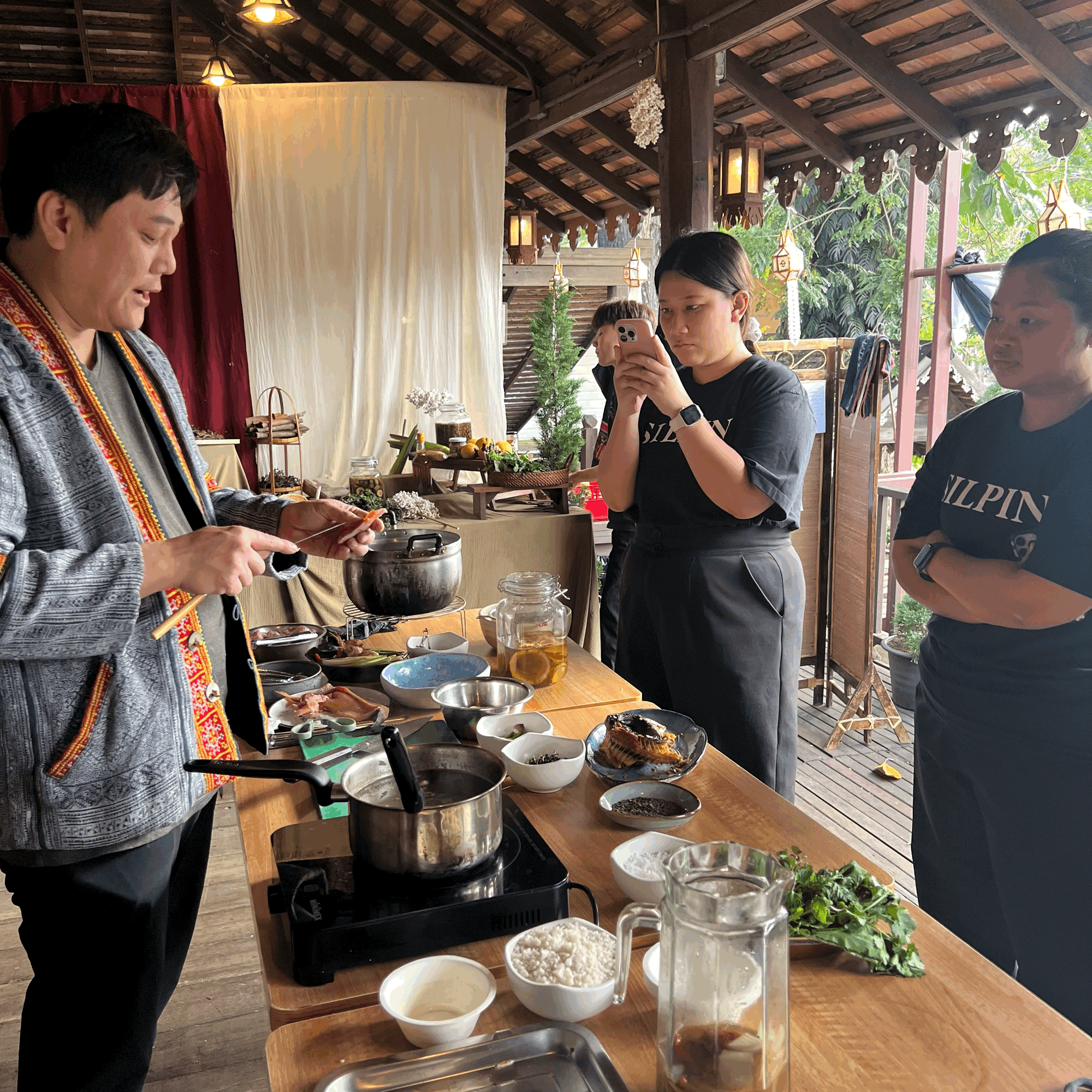
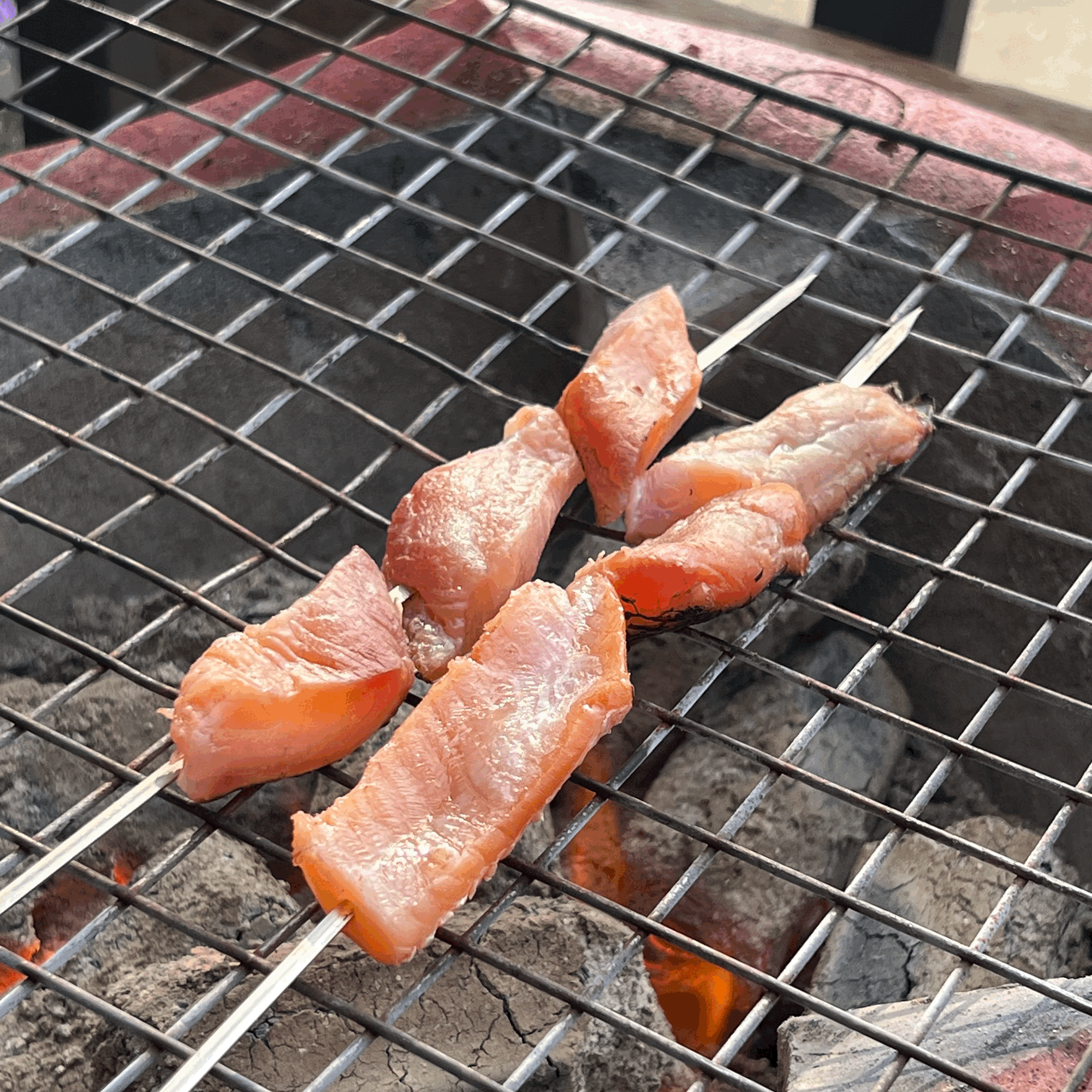
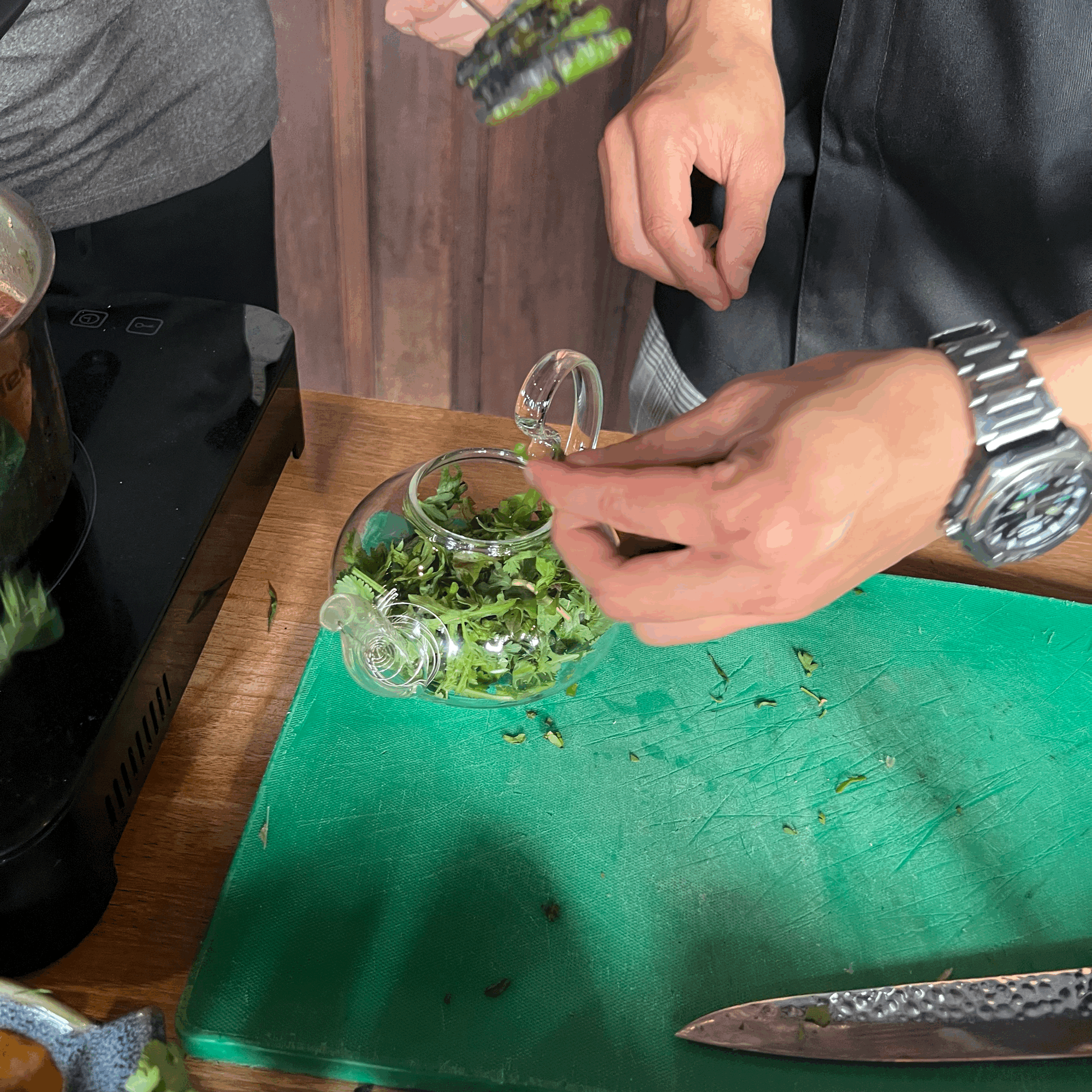
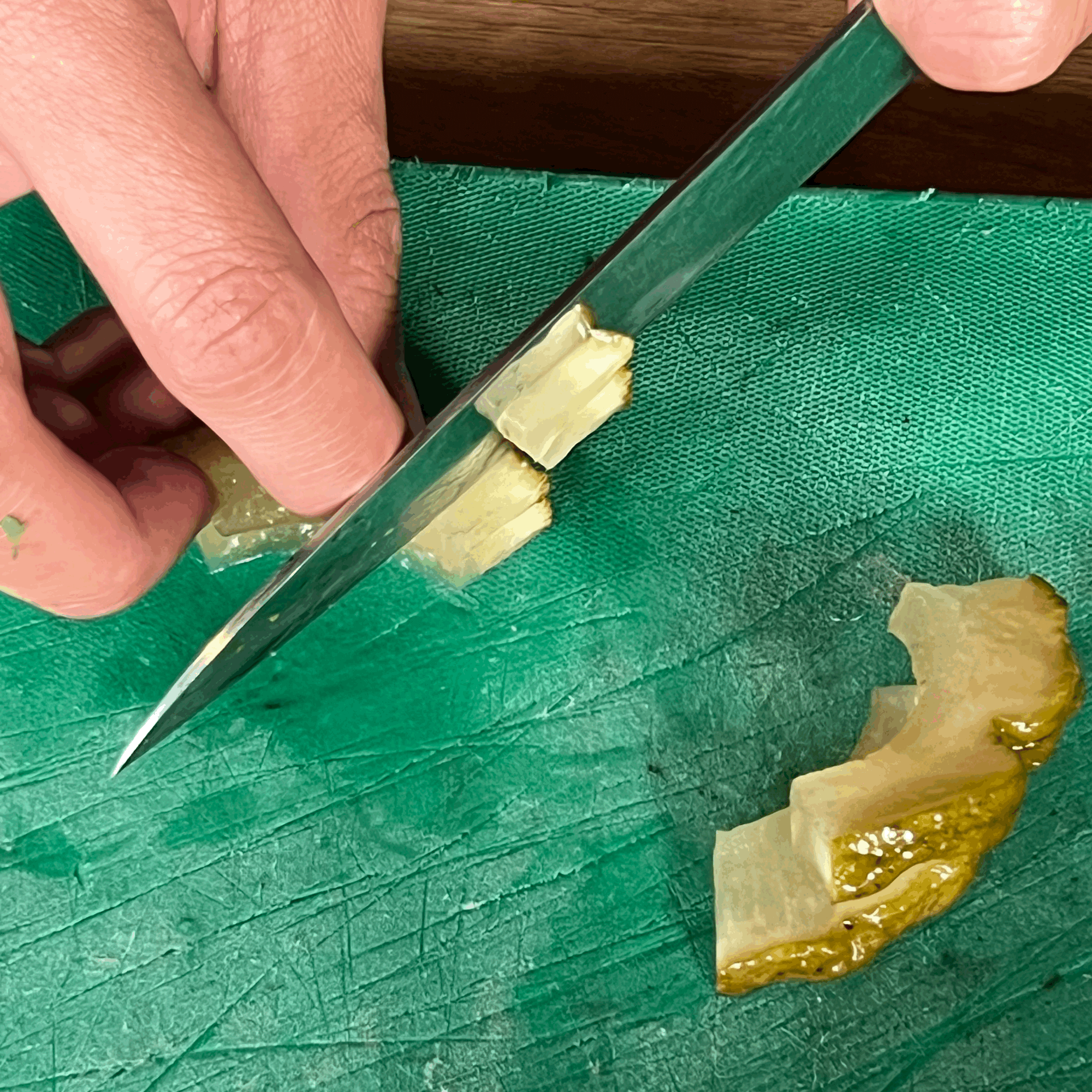
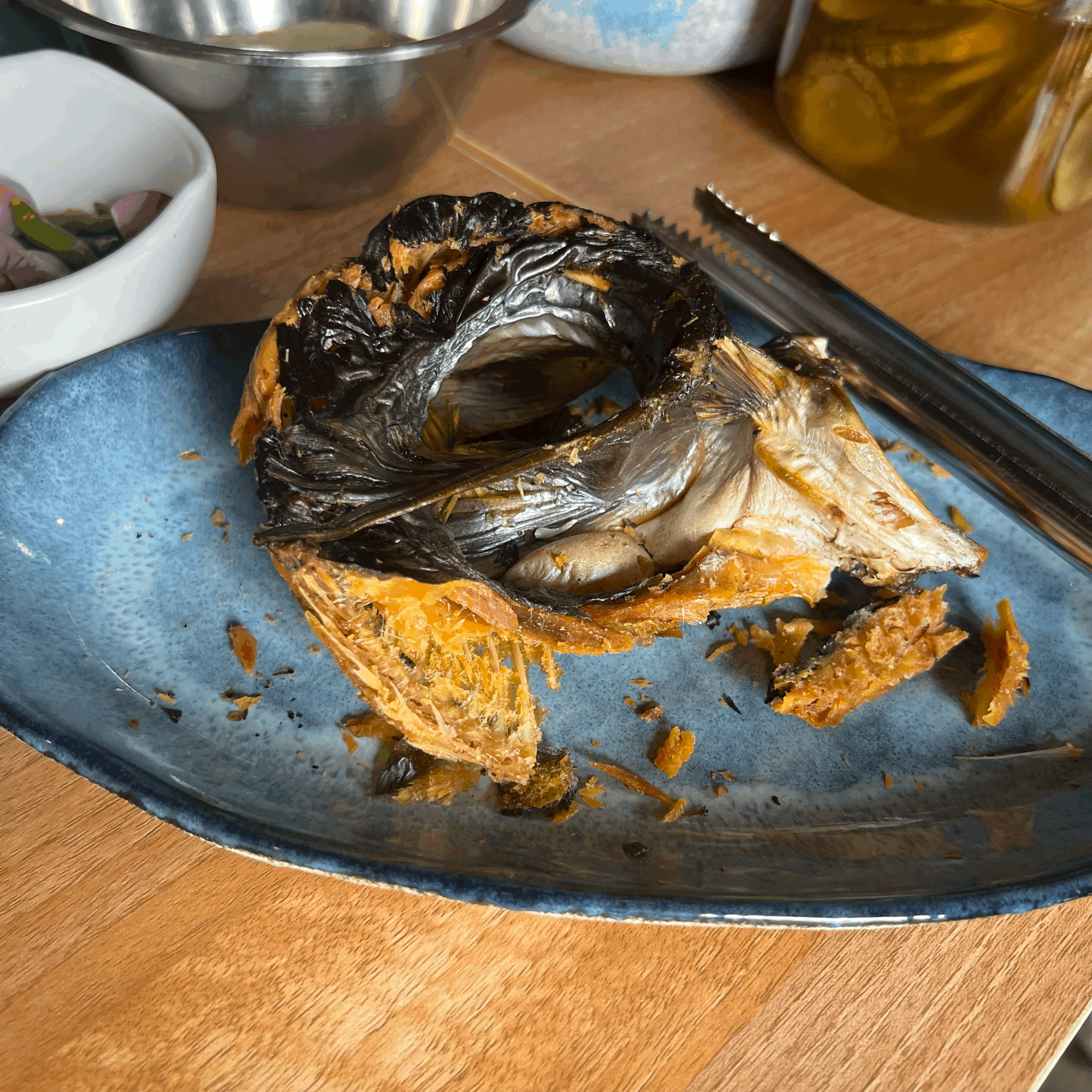
Chef Eak in action. Take note especially of (1) the large Myanmar chilli he was holding before it was charred over a coal fire; the chilli is not spicy but sweet, (2) the patin head at the bottom right, (3) the pot with green herbs into which the soup is poured
Pla swai (patin) fish soup
To bring out the complex flavours and aromas of the soup’s ingredients, Chef Eak grilled them first. The fish released its distinct oil scent, the shallots their sweetness, and the galangal and lemongrass their scents. After bringing all these to a boil in a pot, hor tee la and ba-geu-eur were added to enhance the umami and sour flavours. For saltiness, locally-sourced mountain salt (naan) was added, lending mineral depth that subtly enhances the dish’s natural flavours.
Finally, just before serving, the soup was poured into a teapot filled with the grilled bird’s eye chilli and fresh herbs—dill, coriander, and various basil—to infuse it with heat and bright, green, and lively flavours.
Theatre of tastes
Despite the workshop setting, the participants received five-star treatment at the end. The small portions of risotto were served on large porcelain plates, evoking a course in a degustation menu. Halfway through savouring the rice–fish–pickle–oregano combination, the clear fish soup, now infused and strained through fresh herbs, was poured over the dish, adding a deeper, more nuanced layer of complexity.
Overall, a very satisfying way to spend a couple of hours. Thank you, Chef Eak, and his able assistant, Suz.
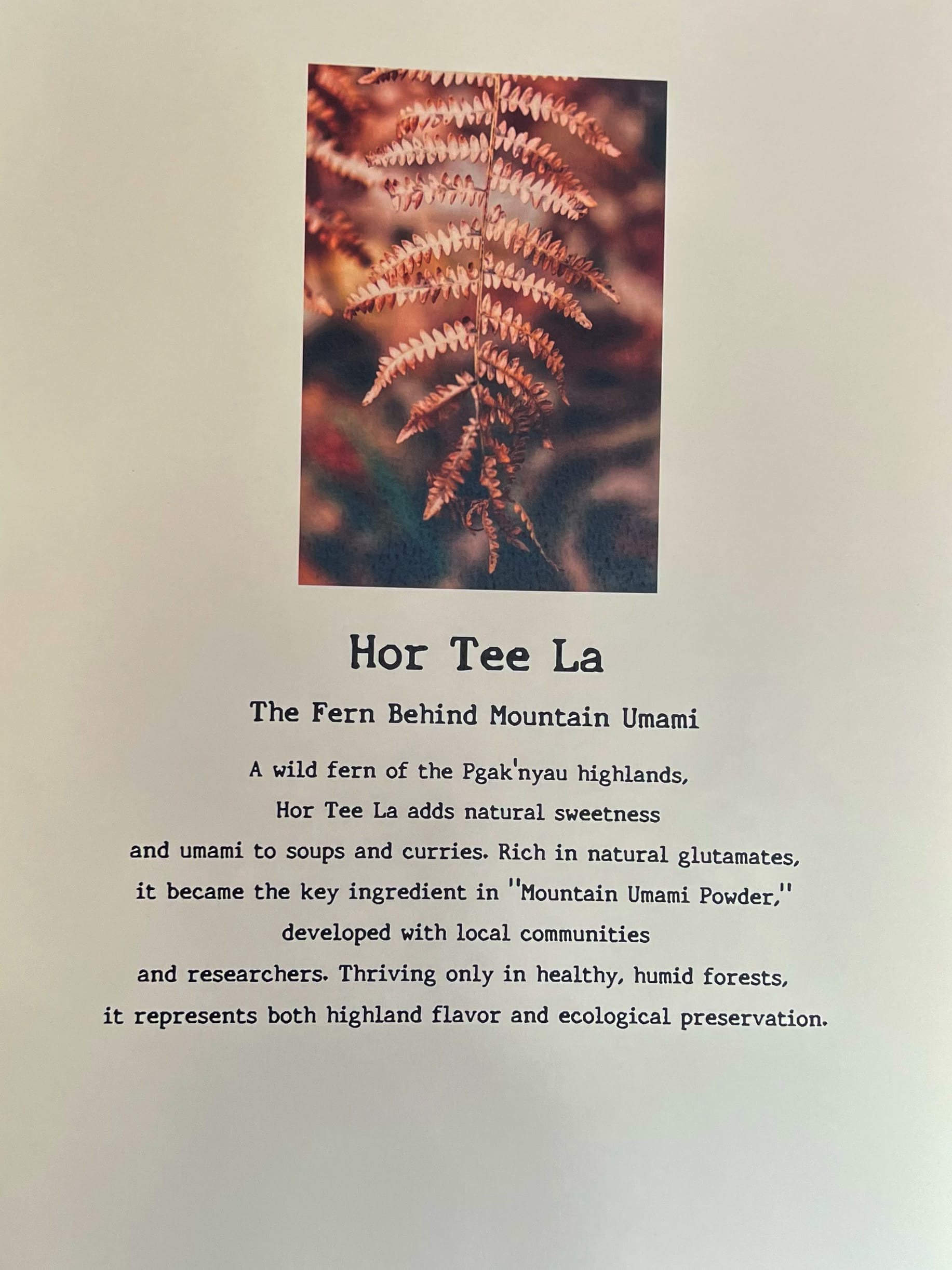
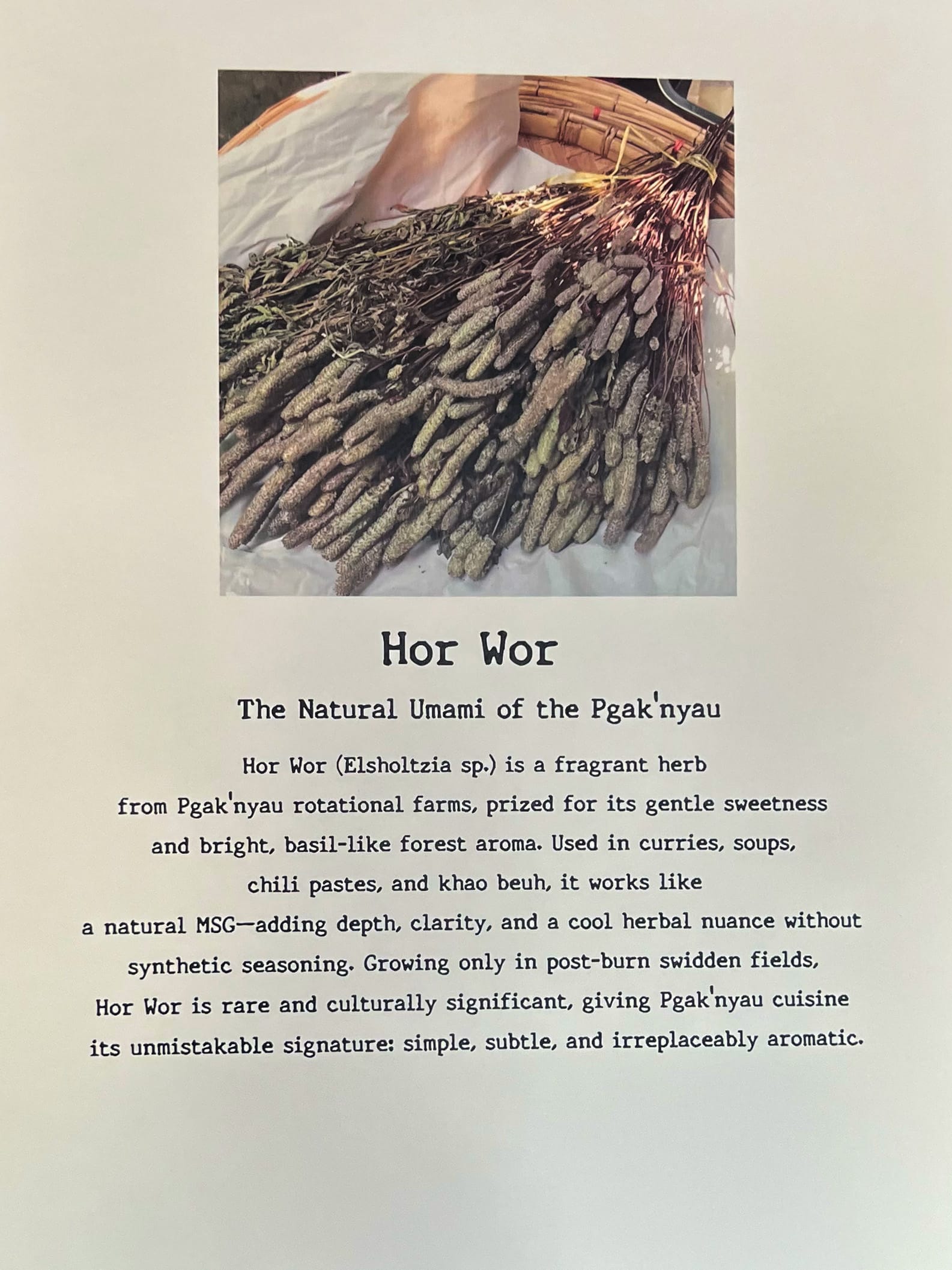
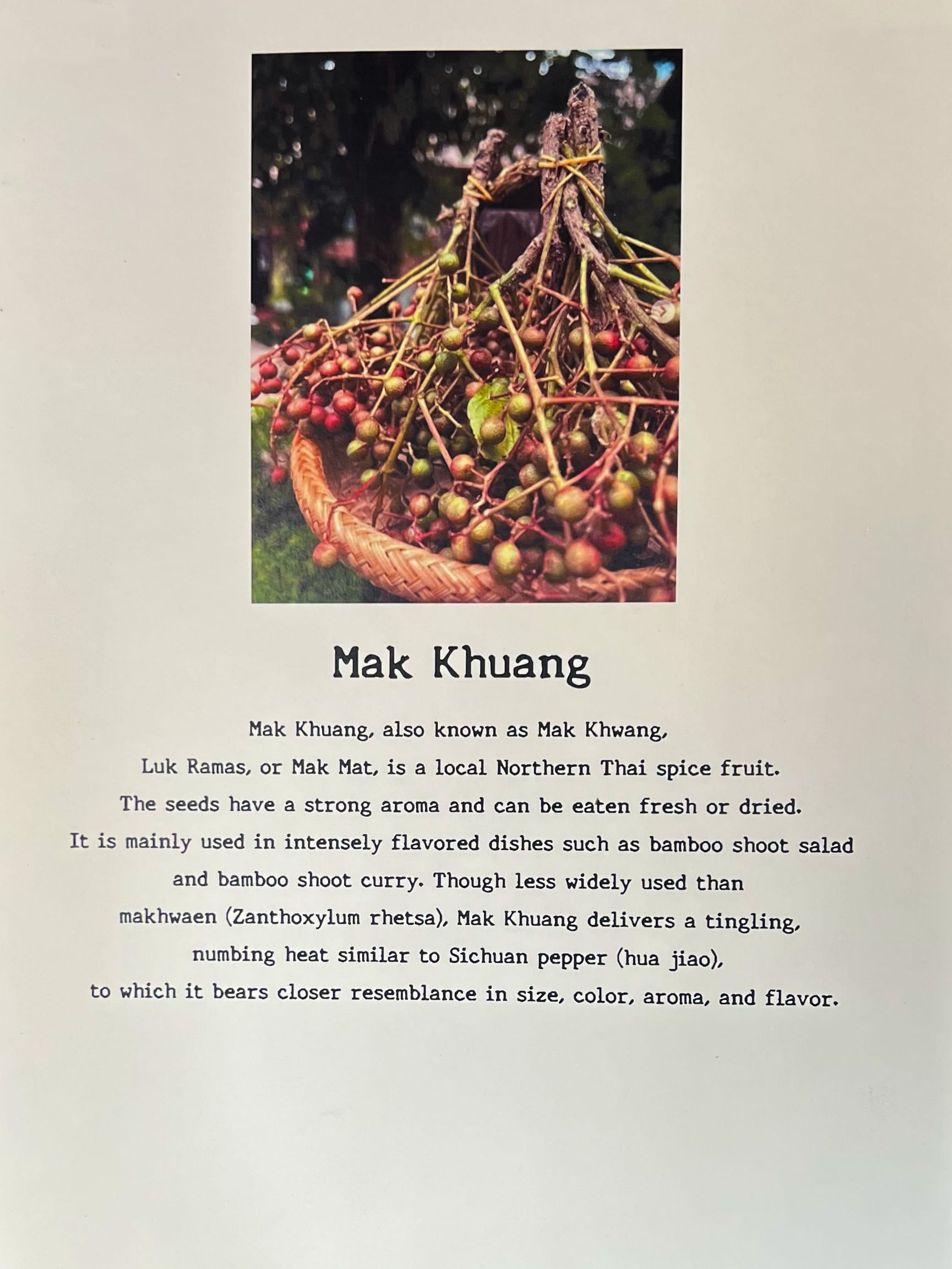
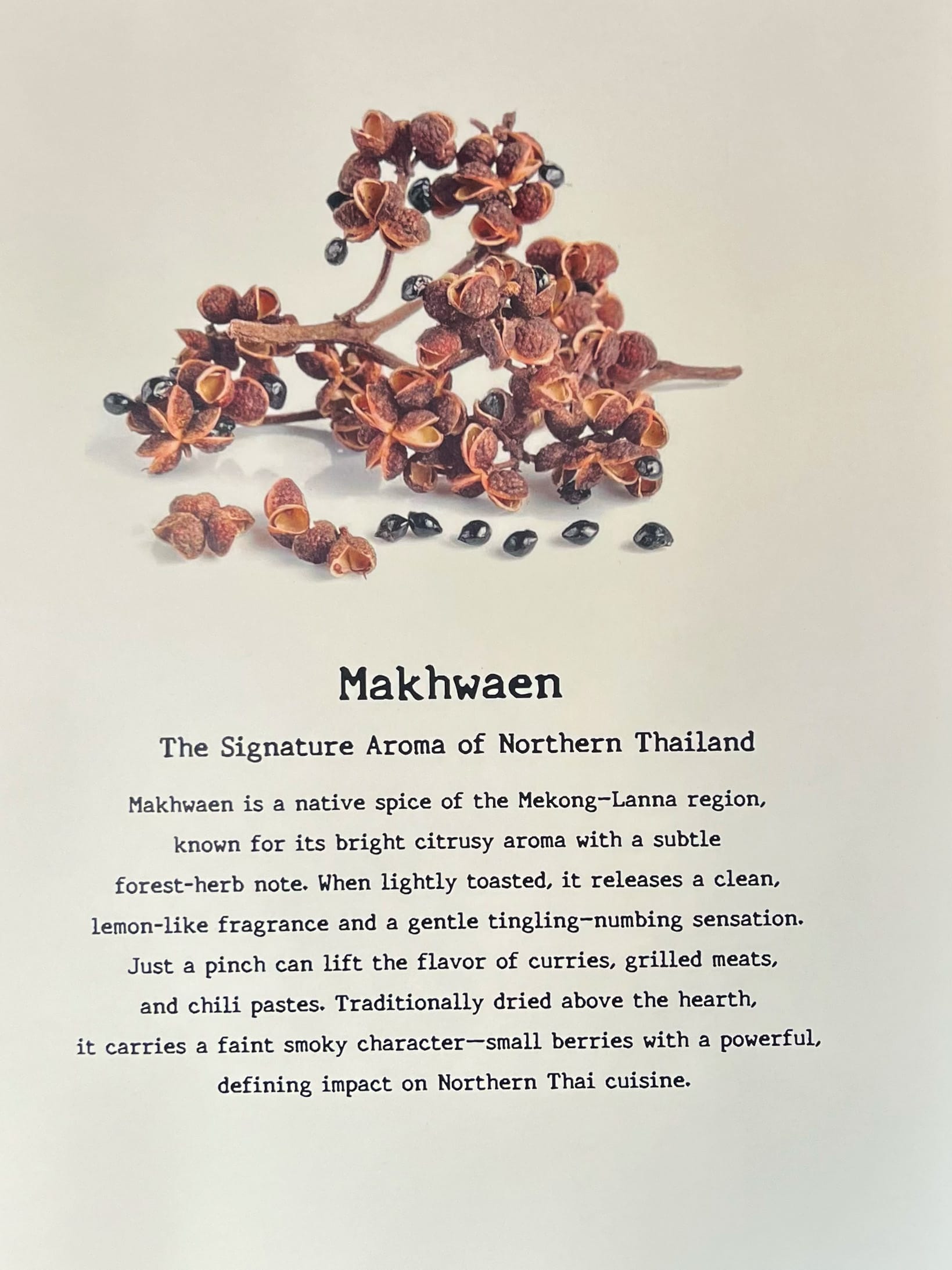
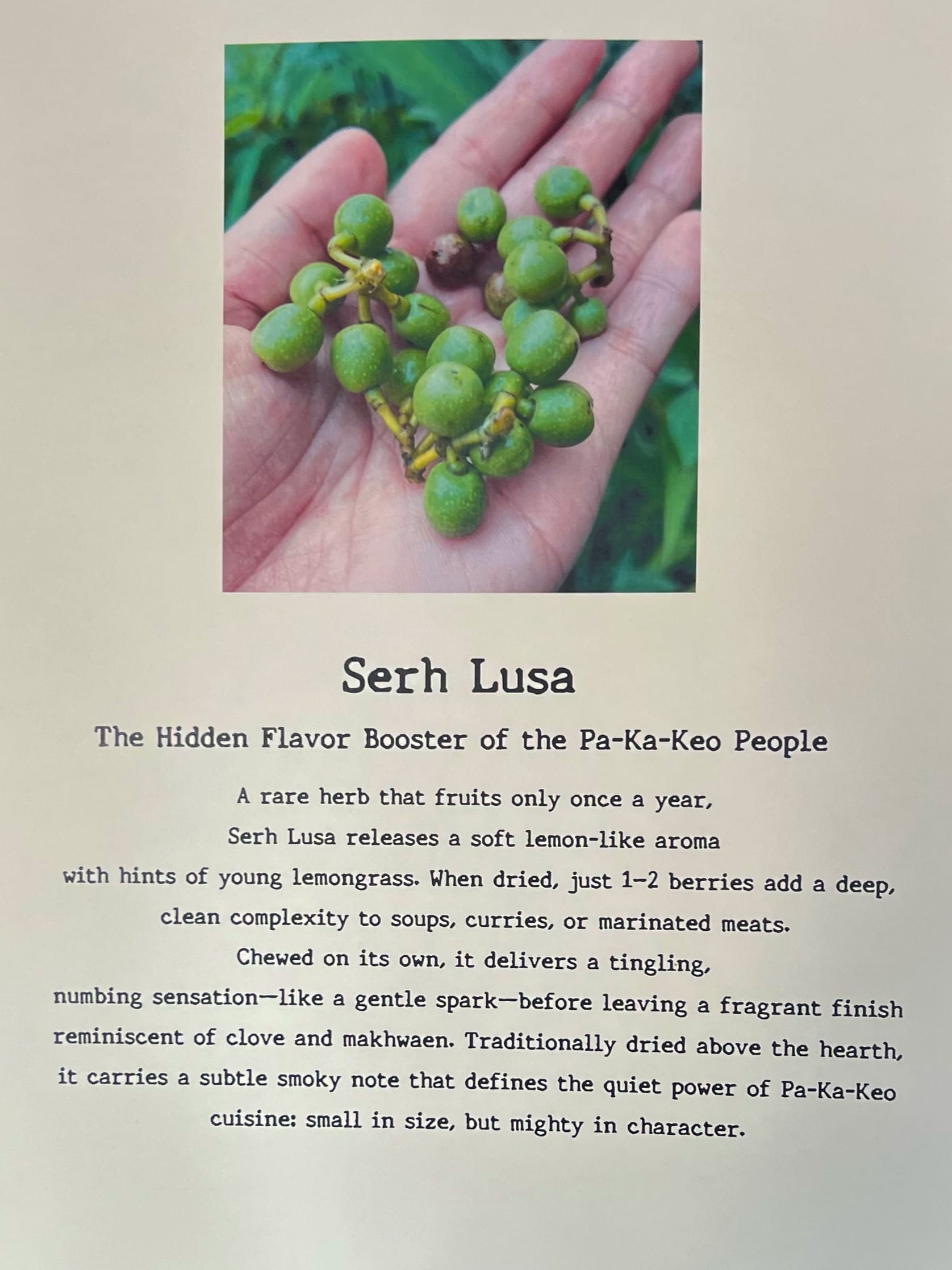
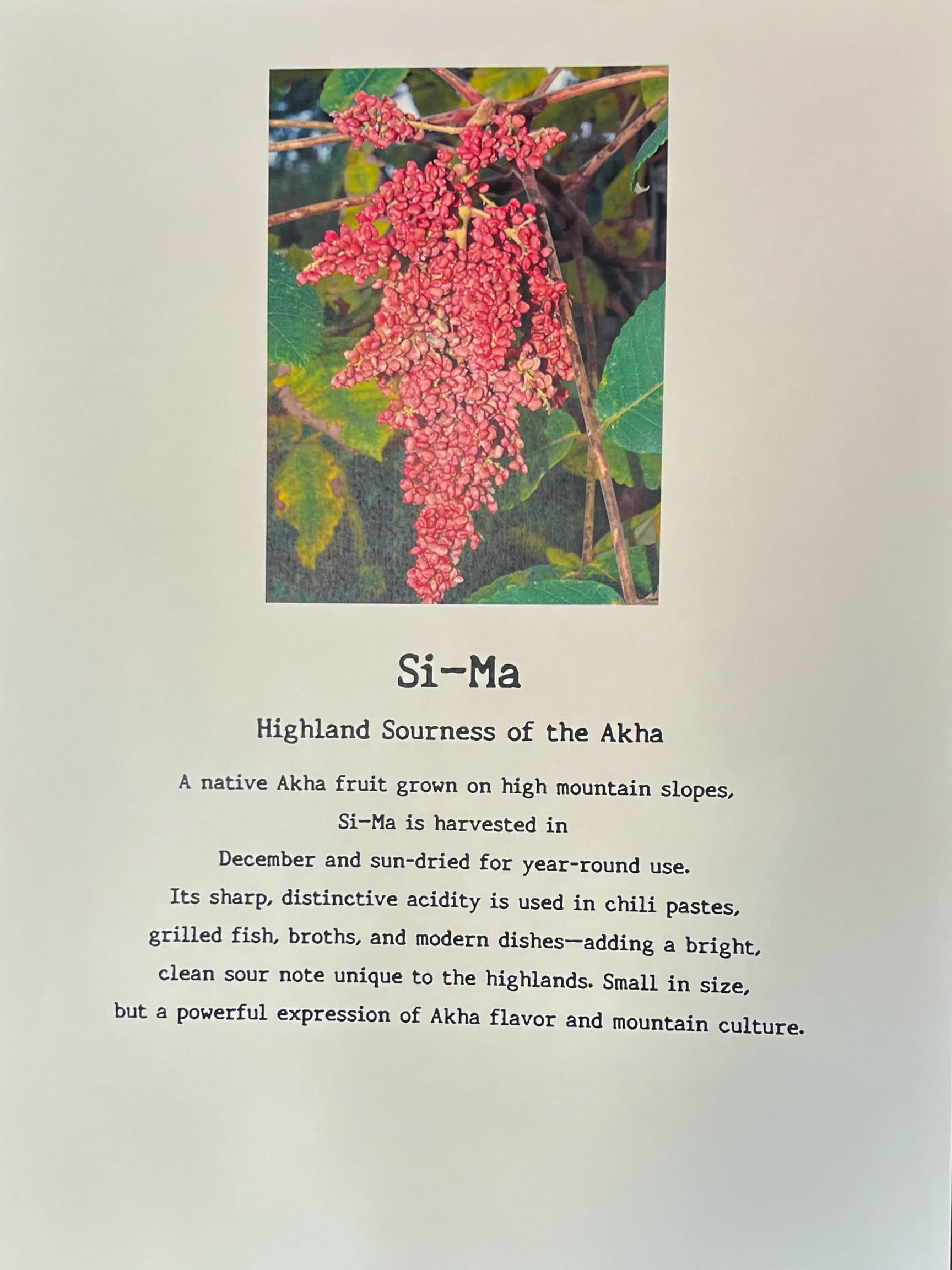
An array of spices used by the Karen and other ethnic groups of northern Thailand