Plates of faith & fortune
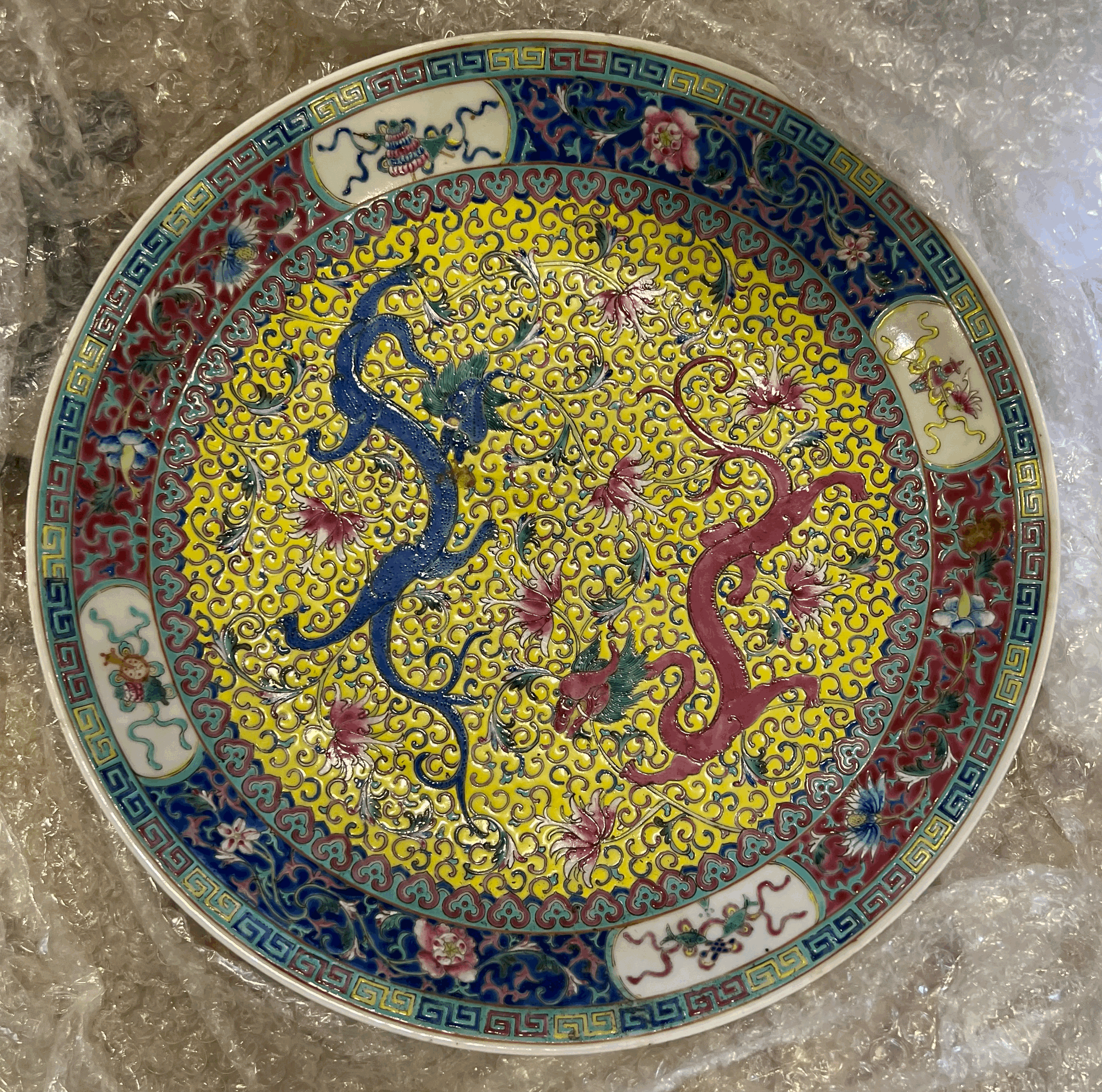
IN OUR household in the 1950s and 1960s, intricately designed Nyonya porcelain plates were used for a range of ceremonial activities—Chinese New Year and rites of passage like marriages and the first moon celebrations of newborns. The practice became increasingly rare later, perhaps because such ware became scarce and its value as an antique rose.
Their designs bring together Chinese decorative traditions, Buddhist symbolism and the distinctive tastes of Peranakan culture. I decided to photograph one such plate (see feature photo), emphasise one of the four pairs of symbols on each artwork, and draw the remainder in ink and pencil.
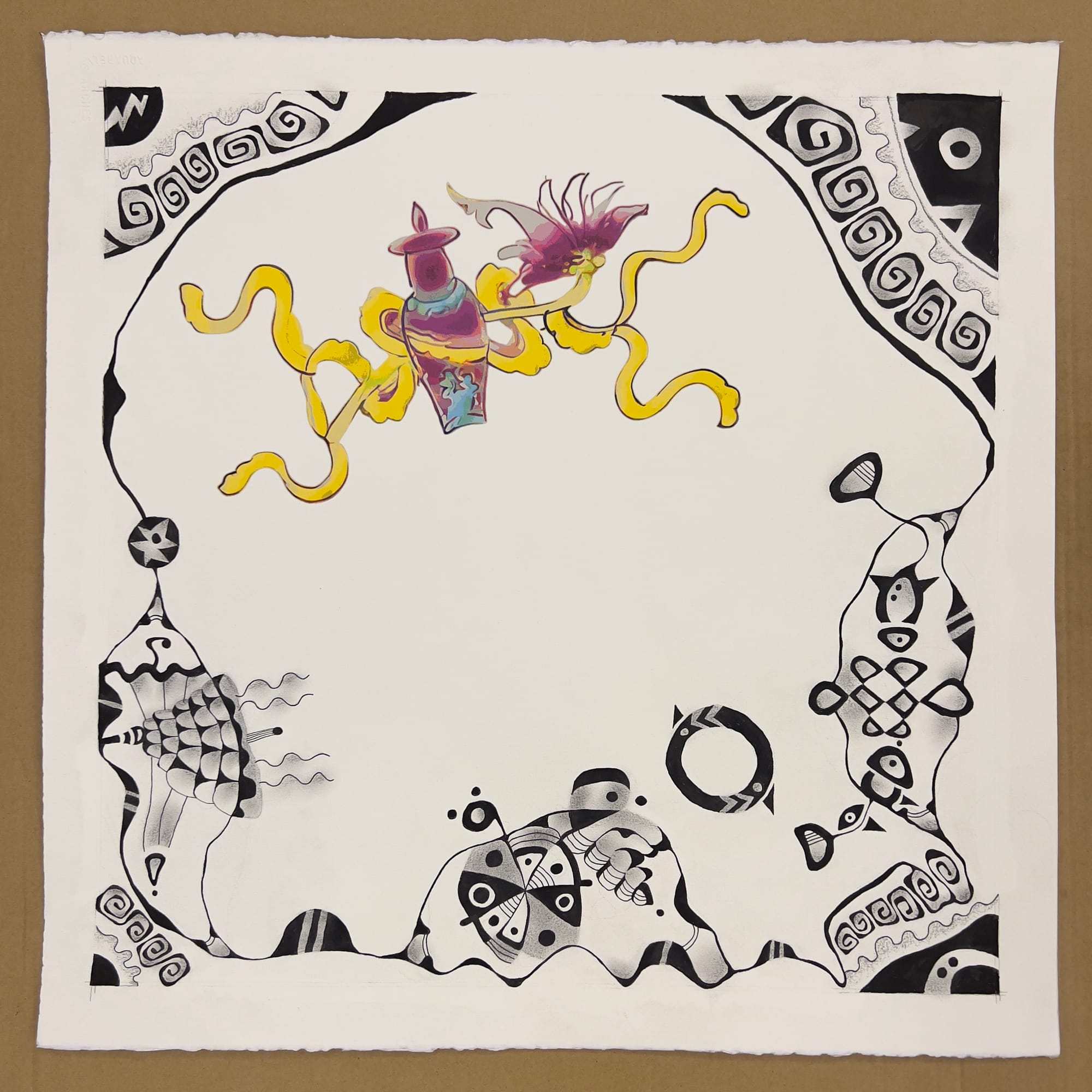
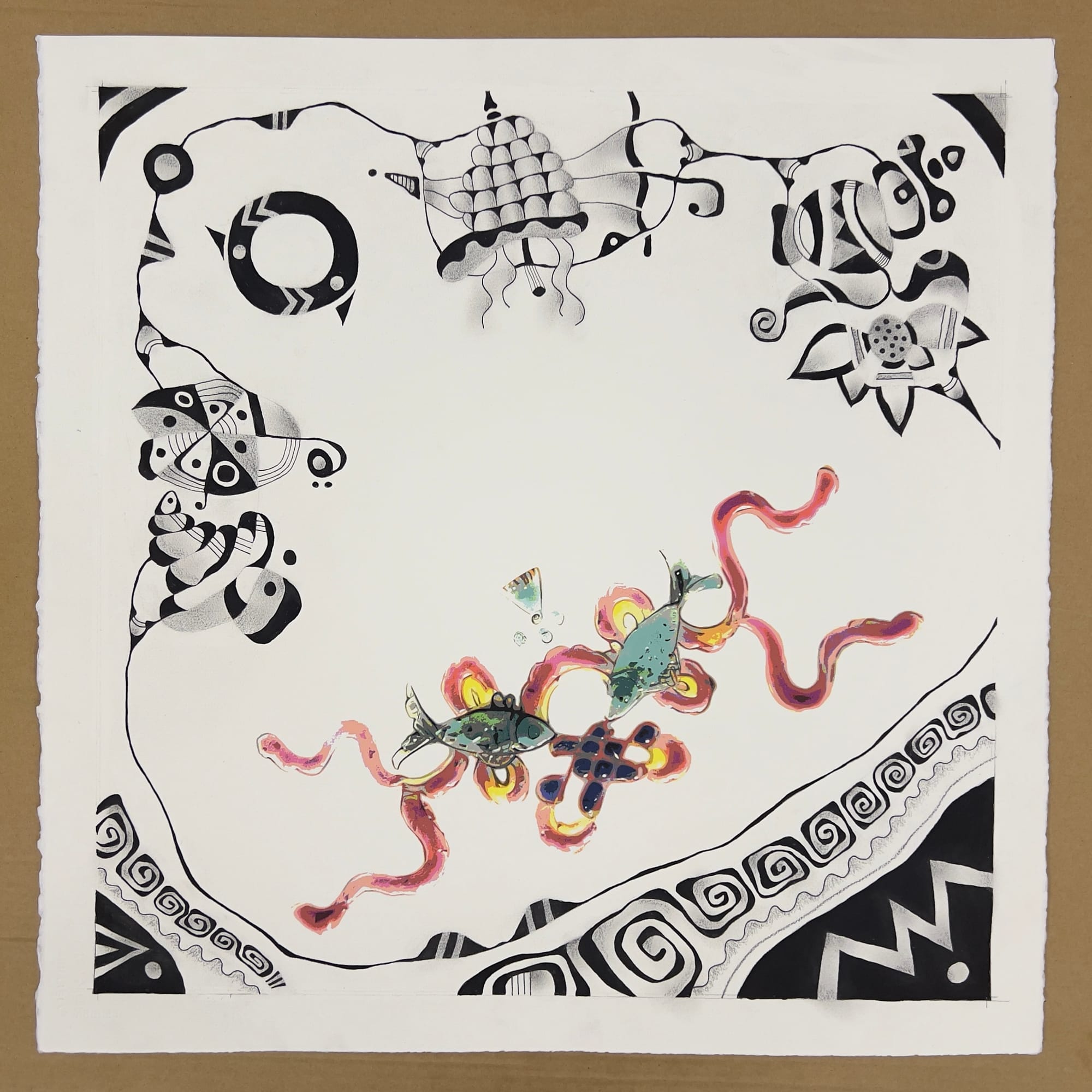
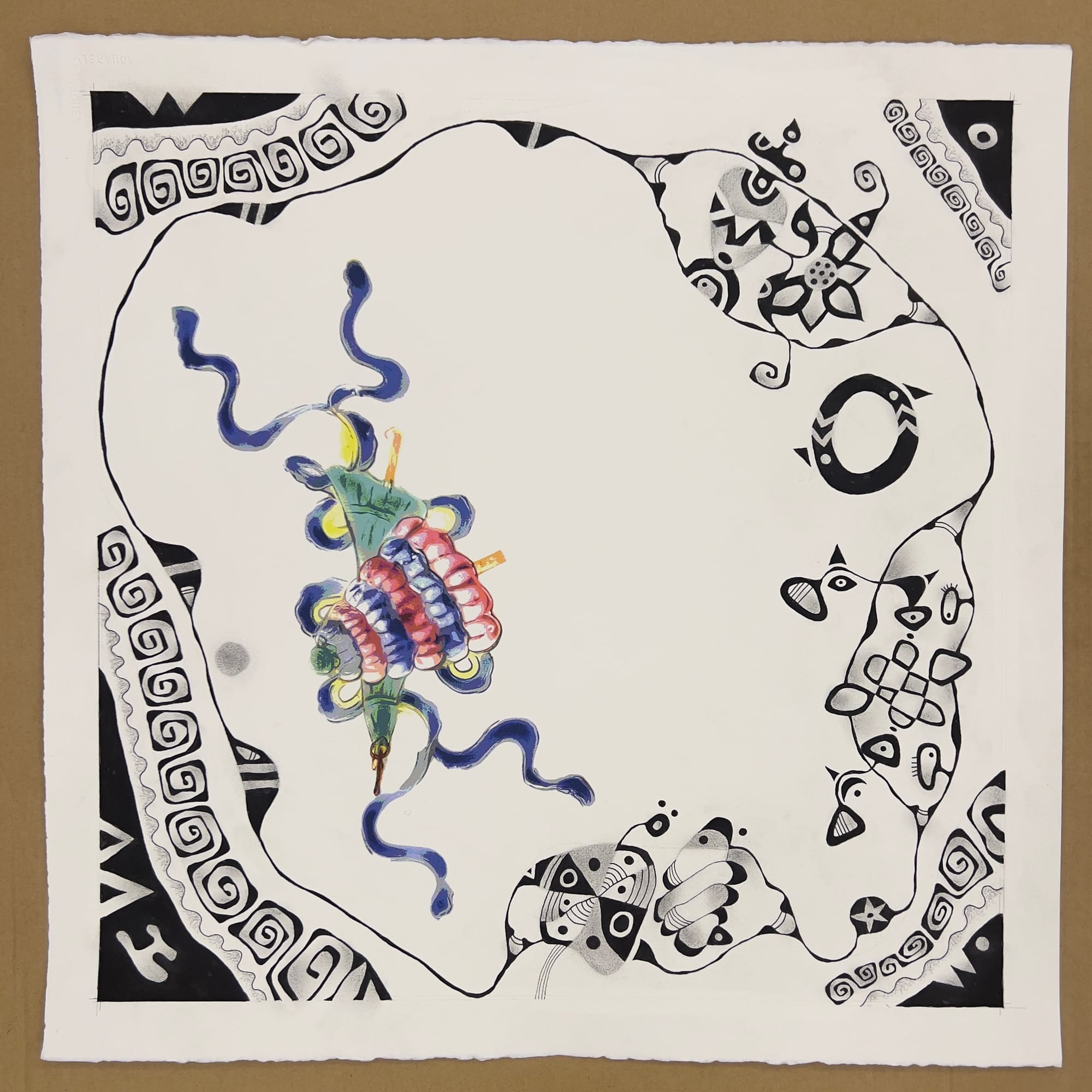
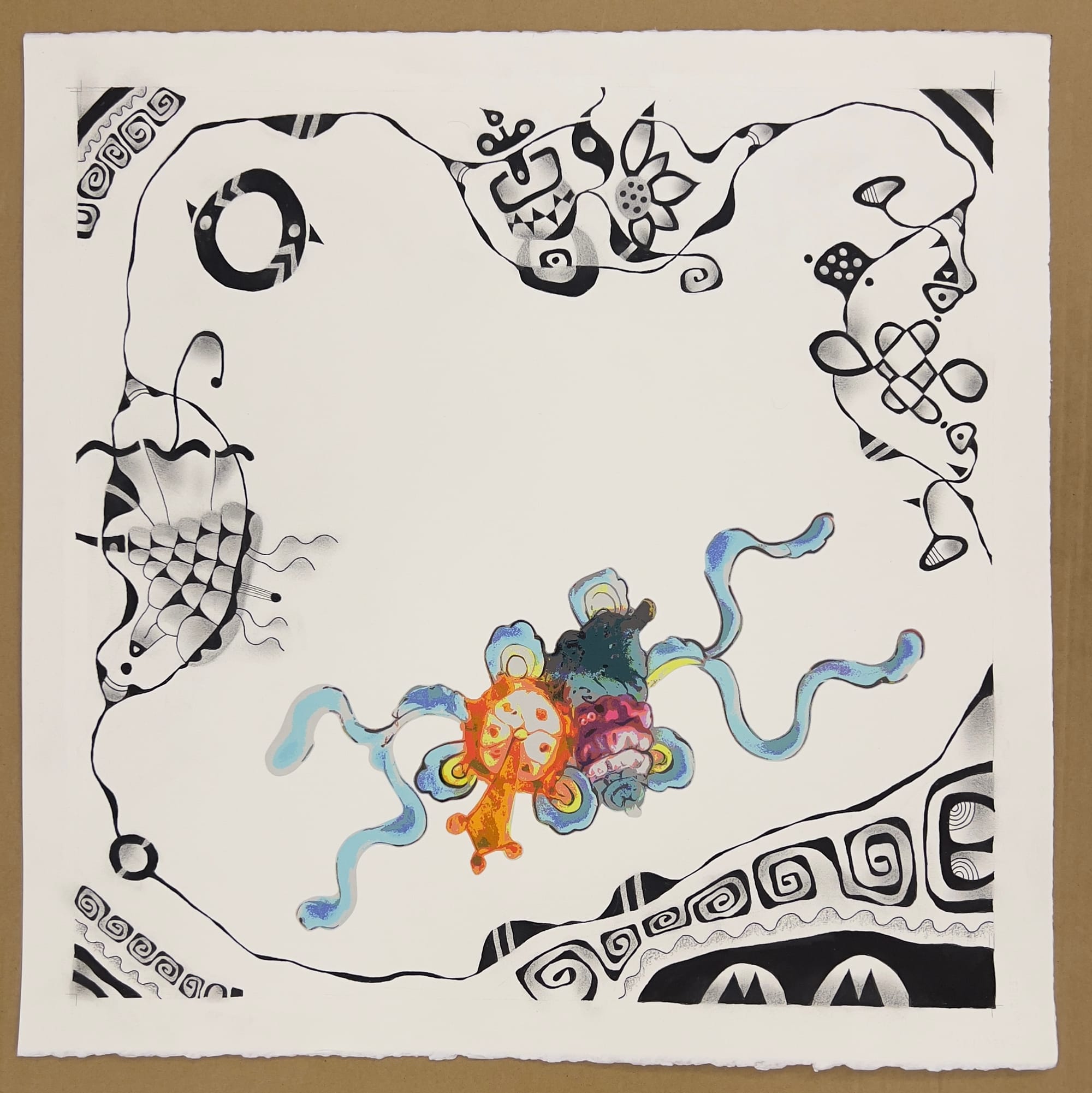
Nyonya Plates 1-4, 2026, mixed media, 51cm x 51cm
These four plates feature the eight auspicious symbols of Buddhism, known collectively as the Ashtamangala. On late Qing famille rose porcelain made for the Straits Chinese market, they were often simplified and stylised:
- Endless knot: A continuous ribbon interwoven symmetrically, with no beginning or end. Its broad lines cross alternately over and under. It represents eternity, interconnectedness, wisdom and compassion.
- Pair of golden fish: Two matching fish, usually upright and facing each other, with curved bodies, scales and spreading fins. They symbolise happiness, abundance, fertility and freedom.
- Treasure vase: A substantial vessel with a rounded body, narrow neck and decorated mouth, sometimes topped by a jewel. It represents inexhaustible treasures, prosperity, abundance and longevity.
- Lotus: Usually an open flower with layered, pointed petals surrounding a central seedpod, sometimes accompanied by buds and leaves. It signifies purity, spiritual awakening and perfection.
- White parasol: A ceremonial umbrella with a circular canopy, central shaft, finial and hanging tassels. Rather than an everyday umbrella, it denotes dignity, spiritual protection and shelter from suffering and ignorance.
- Victory banner: An upright ceremonial standard, commonly composed of cylindrical or tiered sections with hanging ribbons or cloth. It represents wisdom’s victory over ignorance and spiritual attainment over worldly obstacles.
- Conch shell: A right-turning conch, drawn with a pointed tip, prominent spiral and broad opening. It represents the far-reaching sound of Buddhist teachings awakening people from ignorance.
- Dharma Wheel: A circular wheel with eight evenly spaced spokes extending from a central hub, often accompanied by flowing ribbons. The eight spokes represent the Noble Eightfold Path; the wheel signifies Buddhist teaching and the path towards enlightenment.
What fascinates me is how these symbols, with their profound religious associations, became part of everyday visual language. A plate is no longer merely something from which to eat. It also becomes a meeting place of faith, culture, and craftsmanship, carrying inherited meanings into the home.
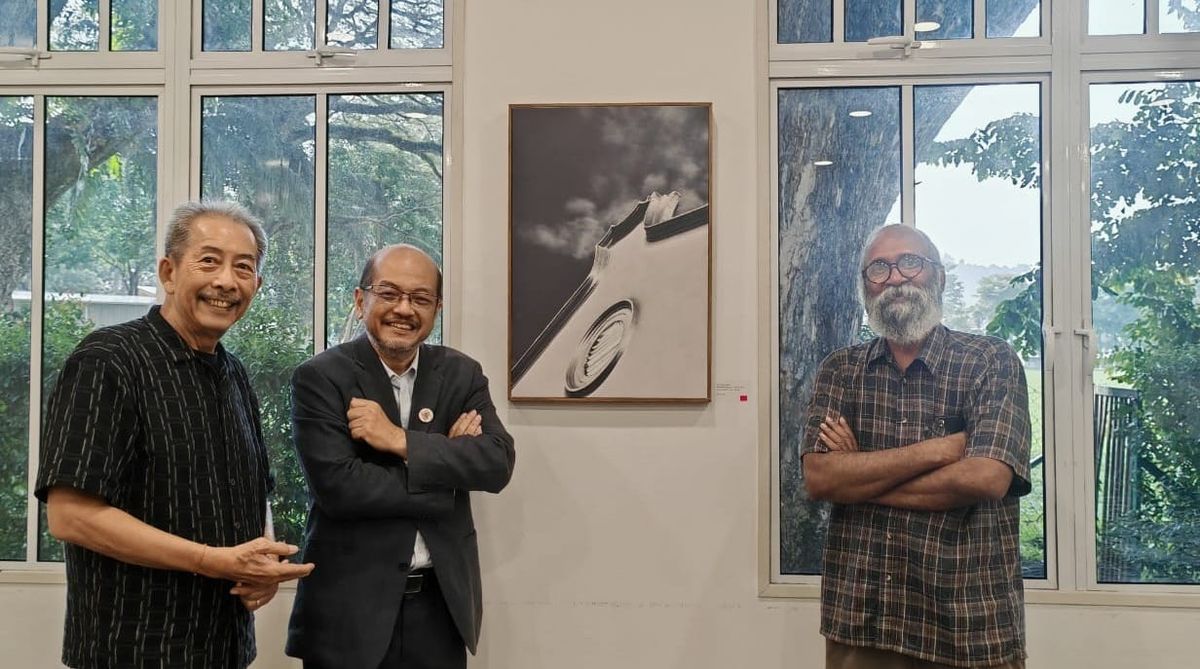
“Nyonya Plates” were part of a photography exhibition entitled For Our State, which ran from September 12-27, 2026, at Penang Institute, 10 Jalan Brown, 10350 George Town, Penang. Lee Khai, Chairman of the Penang State Art Gallery, officiated its launch on Sunday, September 13, 2026.
 Carolyn Khor
 Carolyn Khor